
When I first started working with a recent client, they told me they didn’t know what art they liked. A year later, they were buying art while traveling, at fairs, and on a whim. There was a clear confidence in what moved them, what felt worth it, and what styles they liked.
They didn’t go on to get art degrees or become the next hot collectors. They just started noticing what they loved, asking more questions, and building their own judgement. There are so many guides telling you what to buy, who to copy, and what your home, style, or life should look like. But there is only one person who can tell you what feels right for you: YOU.
My client’s confidence in art was built the way most people’s is, by looking at a lot of art and getting more specific about what you care about.
Today I want to share where we started and some of the works we found together as a peek into what this journey can look like.
Where we started
My clients are a young family with two boys and a modern house that checked the boxes functionally, but felt like it was missing warmth and their own touches. They wanted to bring more art into their space but didn’t have a clear sense of what they were looking for or where to begin, which is when most people first reach out.
We started with a session talking through the mood, colors, and styles they were interested in to build out a visual direction for their home (they had also taken the quiz so we had a good starting point to work from too). The early brief was a mix of place, color, and material, with references to India, Singapore, and Berlin. They were drawn to modern work with craft and texture, abstraction mixed with some figuration (my words, not their’s), deep blues, earthy greens, terracotta, and warmer tones. They wanted the house to feel inviting, joyful, and personal. They found themselves not spending as much time in their shared spaces, simply because it didn’t feel like them.
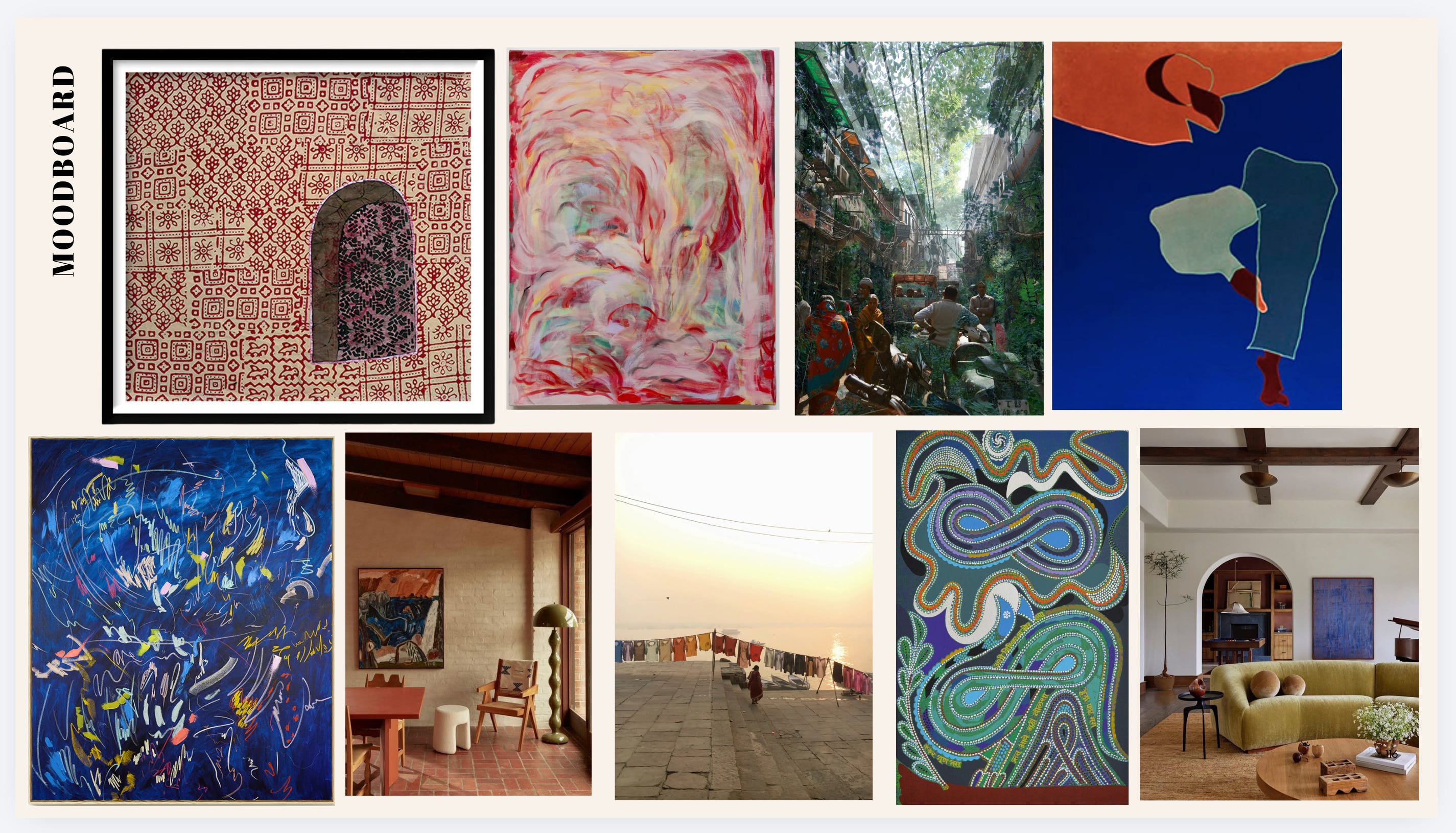
I pulled all of their notes into the moodboard above. Looking back at that first moodboard now, the final collection doesn’t look exactly like it, but almost everything we talked about is there. The moodboard gave us a shared language to start from and a visual compass to filter the art we looked at.
Learning by looking
From there, we looked at a lot of art.
We went to the Other Art Fair, looked during LA Art Week, set up gallery visits when they traveled, and went through artists together virtually and IRL. Some pieces were immediate nos, some stayed around for a few rounds, and some helped clarify what they liked even though they never bought them.
There wasn’t one moment where it clicked. They just looked at enough art to get more specific with each round, and they started looking on their own too. When they went to Singapore, I lined up galleries for them to visit, and they came home with work they’d picked themselves and felt much more sure of their choices. They got more comfortable letting a decision be personal, even if it wasn’t perfect. My role was to help them notice the patterns in what they kept responding to and put language around those instincts.
We landed on four pieces together, and I love how each one fits like a piece of the puzzle in their story and lays the foundation for whatever is to come.
Jyoti Bhatt: heritage with a sense of humor
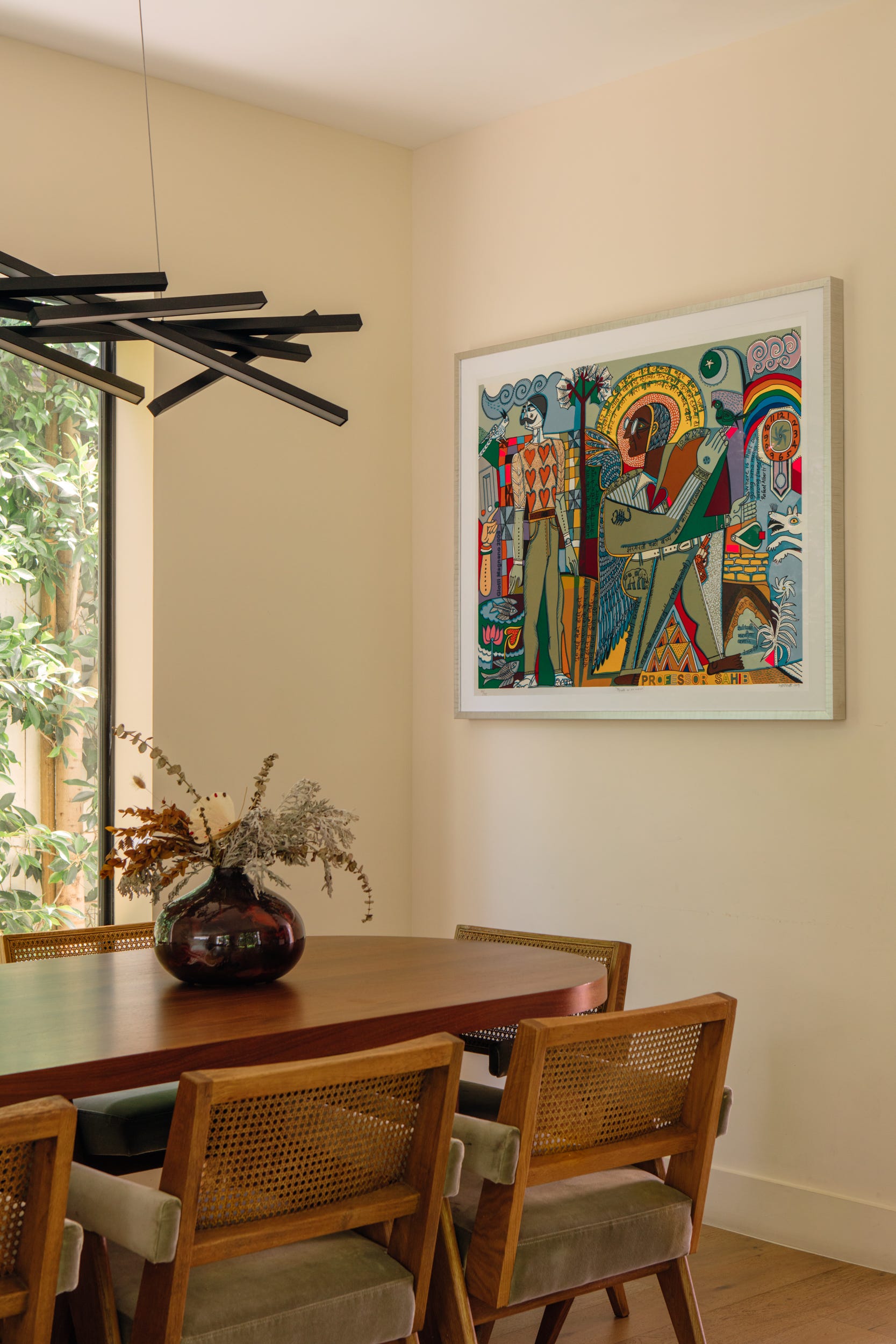
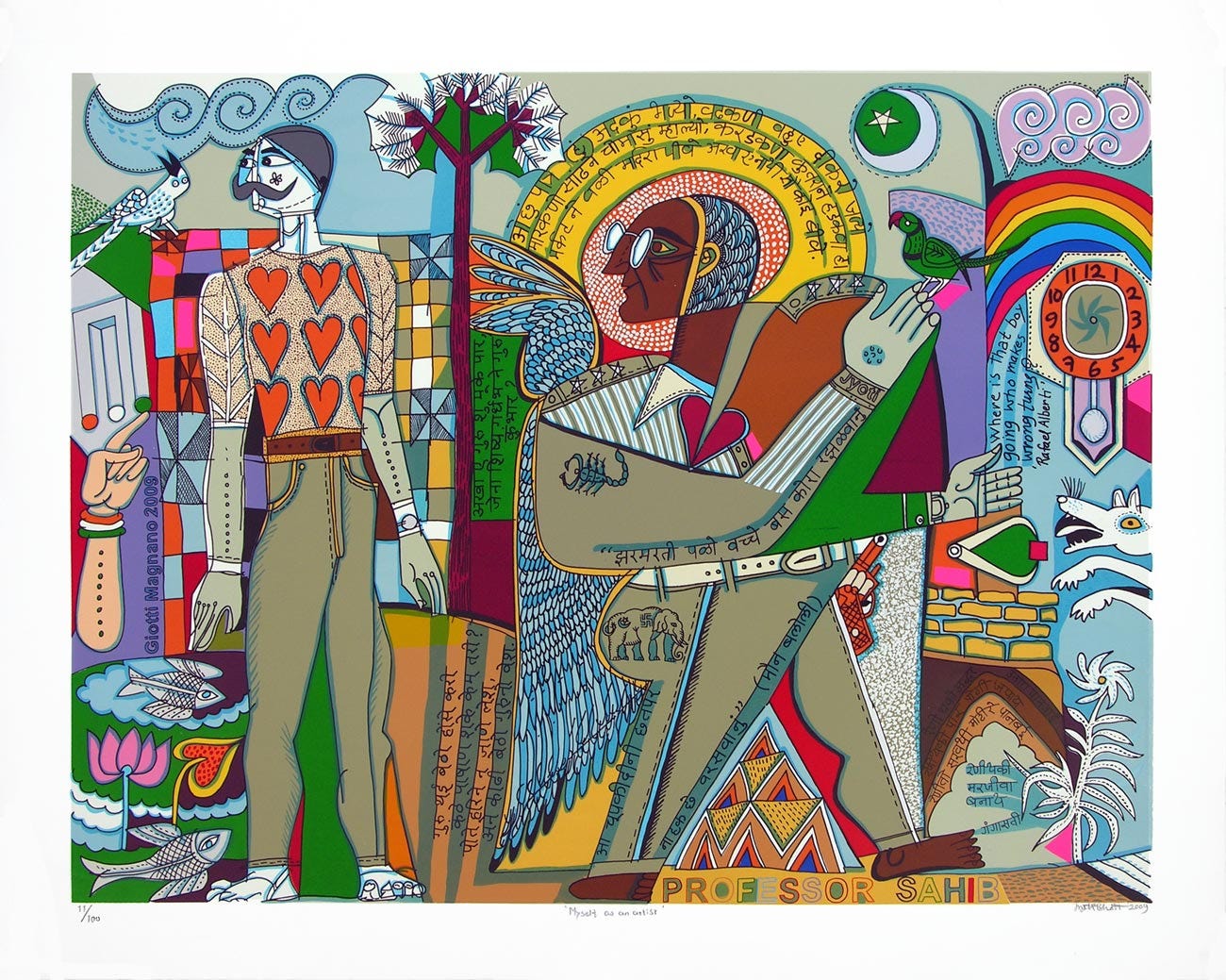
Jyoti Bhatt’s Myself As An Artist was probably the clearest tie back to the original brief, bringing Indian heritage into the house without the art feeling traditional. Bhatt, born in 1934, is one of the central figures of the Baroda School, and his work is in the collections of MoMA, the Smithsonian and the British Museum. His prints bring Indian folk and craft traditions into a modernist visual language, but honestly, the reason this piece stuck was much more personal. There’s something funny and joyful about it, the Professor Sahib figure especially, and the client kept coming back to it.
I love the placement of this work over a dining table because there’s so much to look at and is a natural conversation starter without even trying.
Assia Bennani: family and play
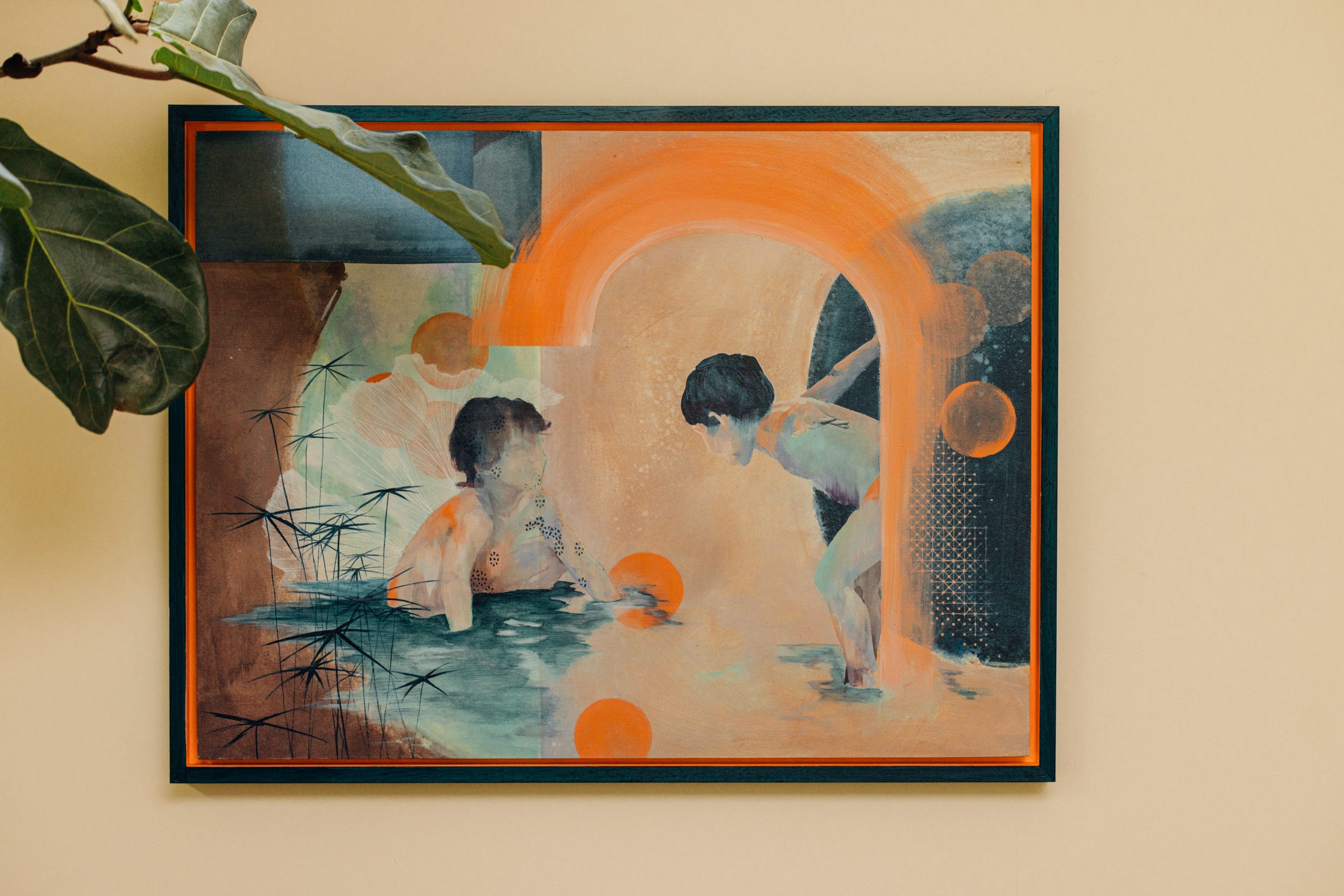
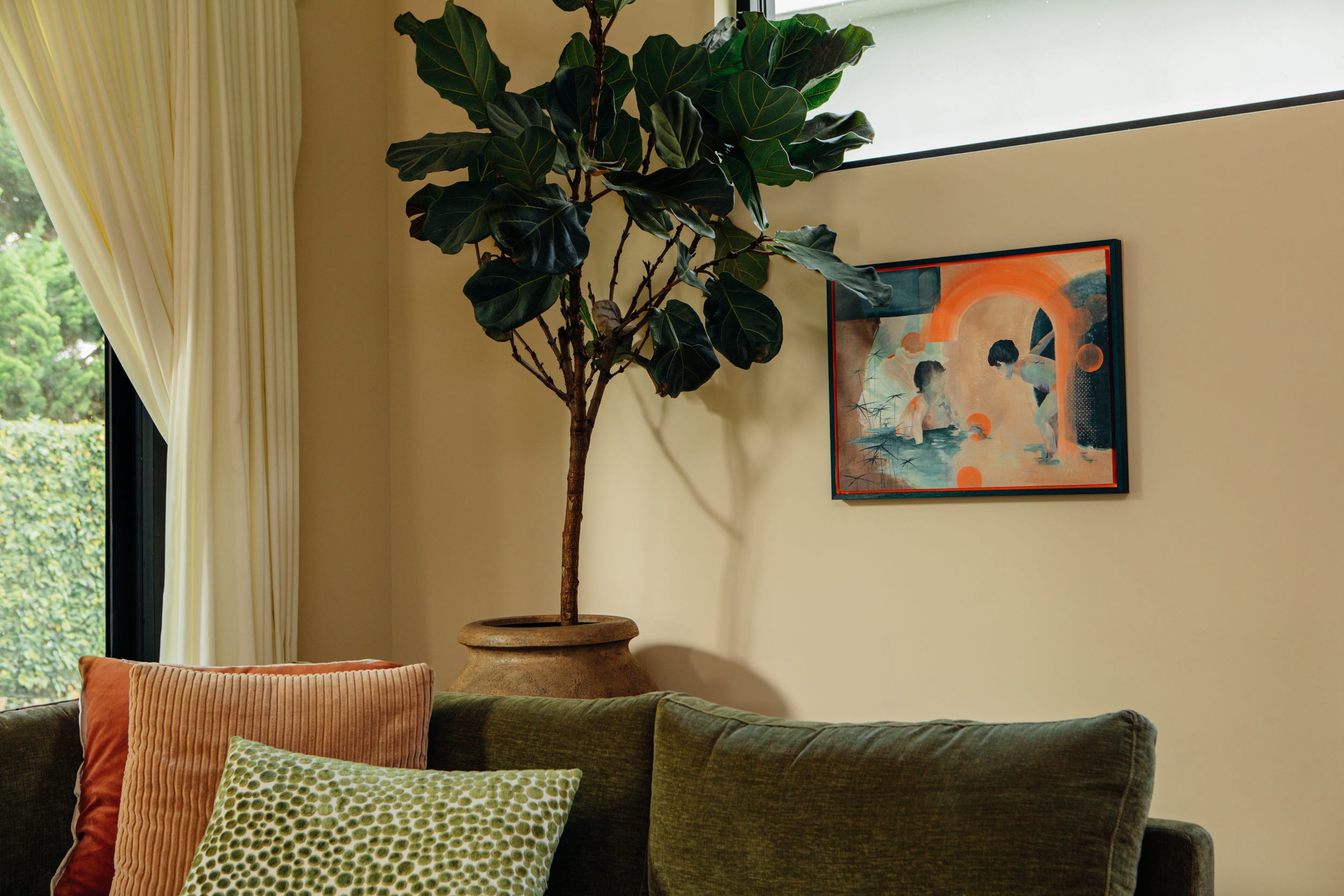
One of the key areas we were looking to solve was the back wall of the living room, which is immediately in view as you enter. The goal of the art on this wall was to draw people in and tell more of this family’s story. Assia Bennani’s Playtime was the perfect piece for this.
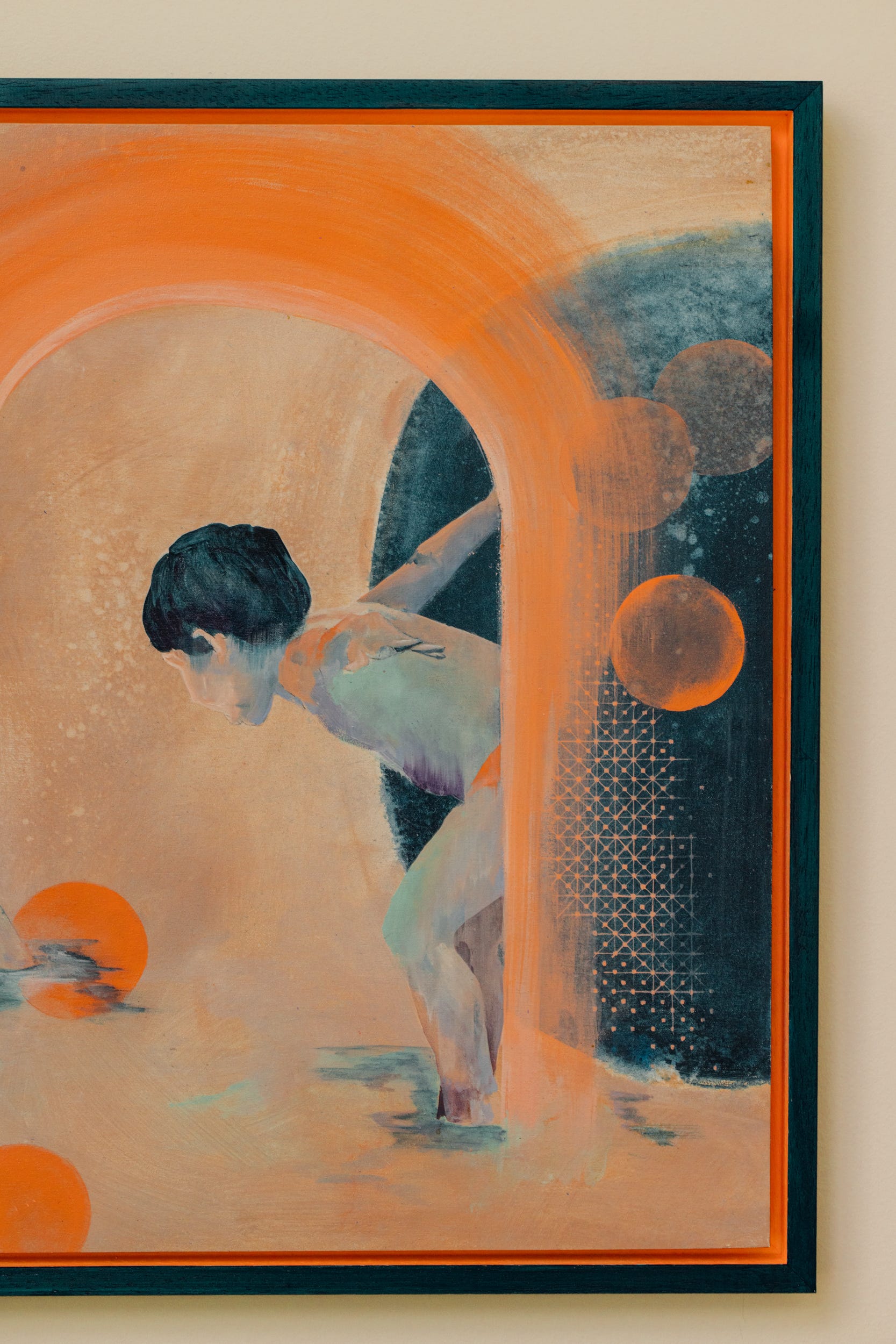
Bennani is a Moroccan artist, and her series Reclaim Dreaming is about the limited space we leave for dreaming and imagination. Playtime comes from that series and reminded the clients of their own boisterous family.
The work is acrylic on wood panel and came in its own blue-and-orange wood frame, which added texture and organic material to a home with much smoother, more polished finishes. It brought more of their family into the room, especially the energy and playfulness of their boys.
Sarana Haeata: blue, movement, and something deeper
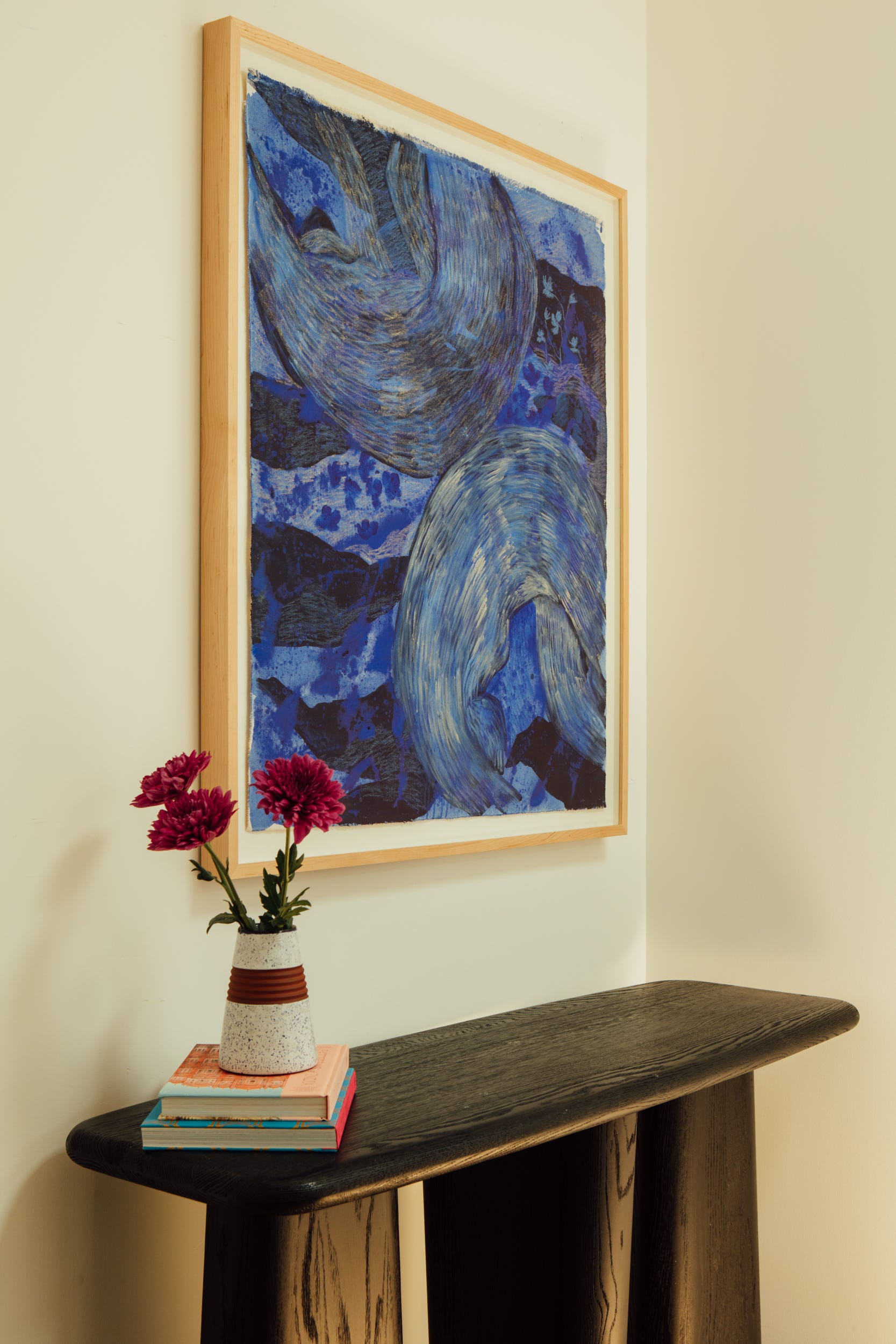
Sarana Haeata’s Summer Nights was the most direct hit on the visual brief - deep blue, abstract, full of gesture and movement. Haeata’s practice looks at identity, parenting, surrender, freedom, and the process of finding yourself inside all of that, which also spoke to themes and ideas the clients were working through (aren’t we all?).
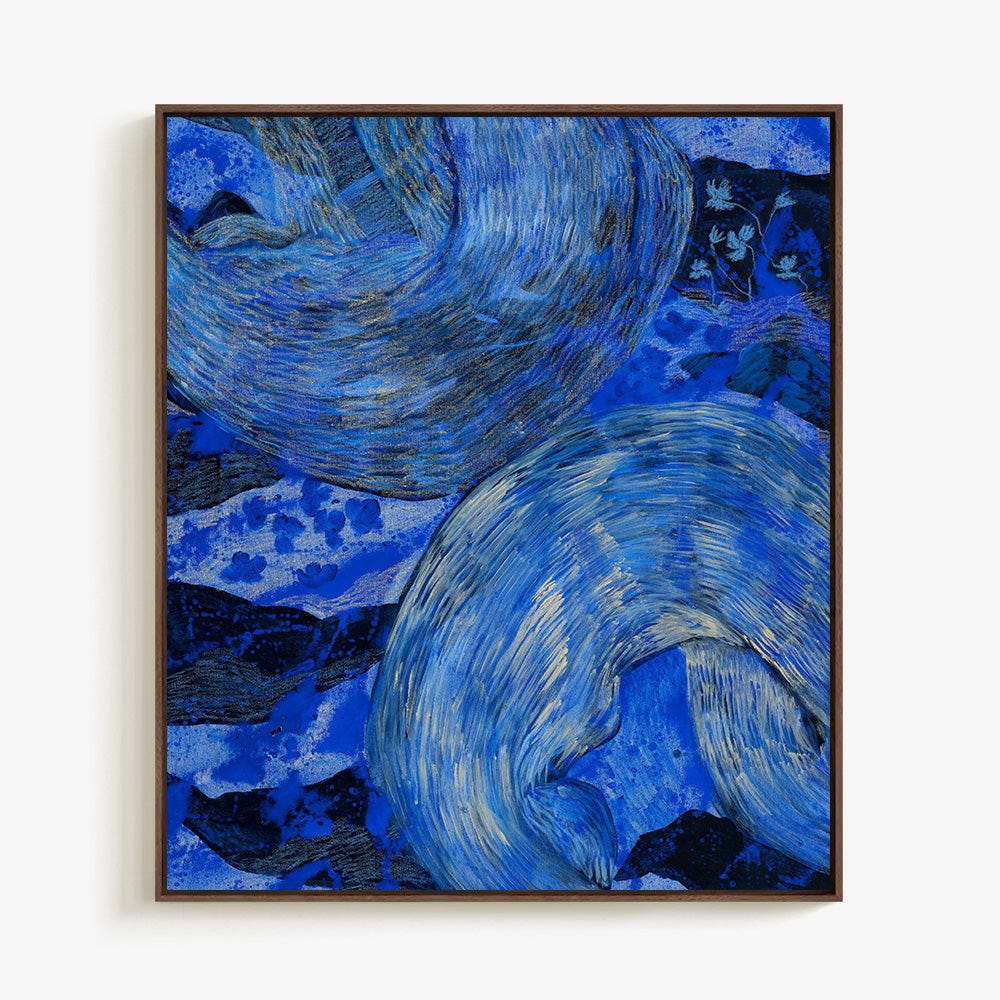
We bought it for the back living room wall to live with Bennani, but once it arrived, the blue read too dark in that light. We moved it upstairs to the landing, where it works as the perfect transition from the energy of the main shared spaces to a moment of calm before entering the family’s bedrooms and private spaces.
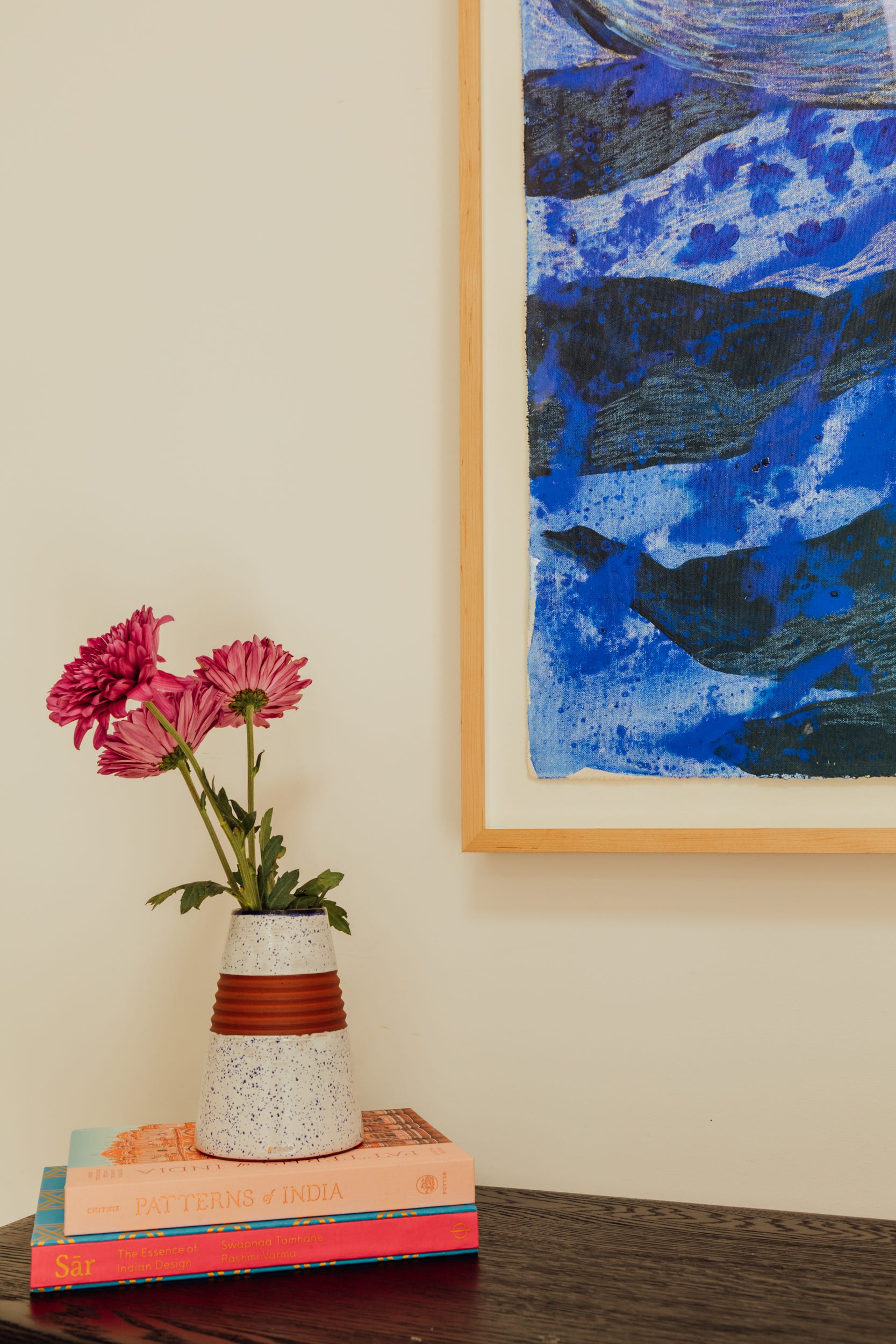
An interesting detail here is in the framing. This work is on canvas, but instead of stretching it on bars and placing it in a traditional float frame, we decided to float-mount it so you can see the edge of the canvas and the rawness of the brushstrokes and material.
One of the big themes of the art in the home was to bring out more organic, lived-in materiality in the space and to find small ways to reinforce that through the art, materials, framing, and placement. Tiny details that, in sum, make it feel much more intentional.
Alex Maceda: the warming glow we were looking for
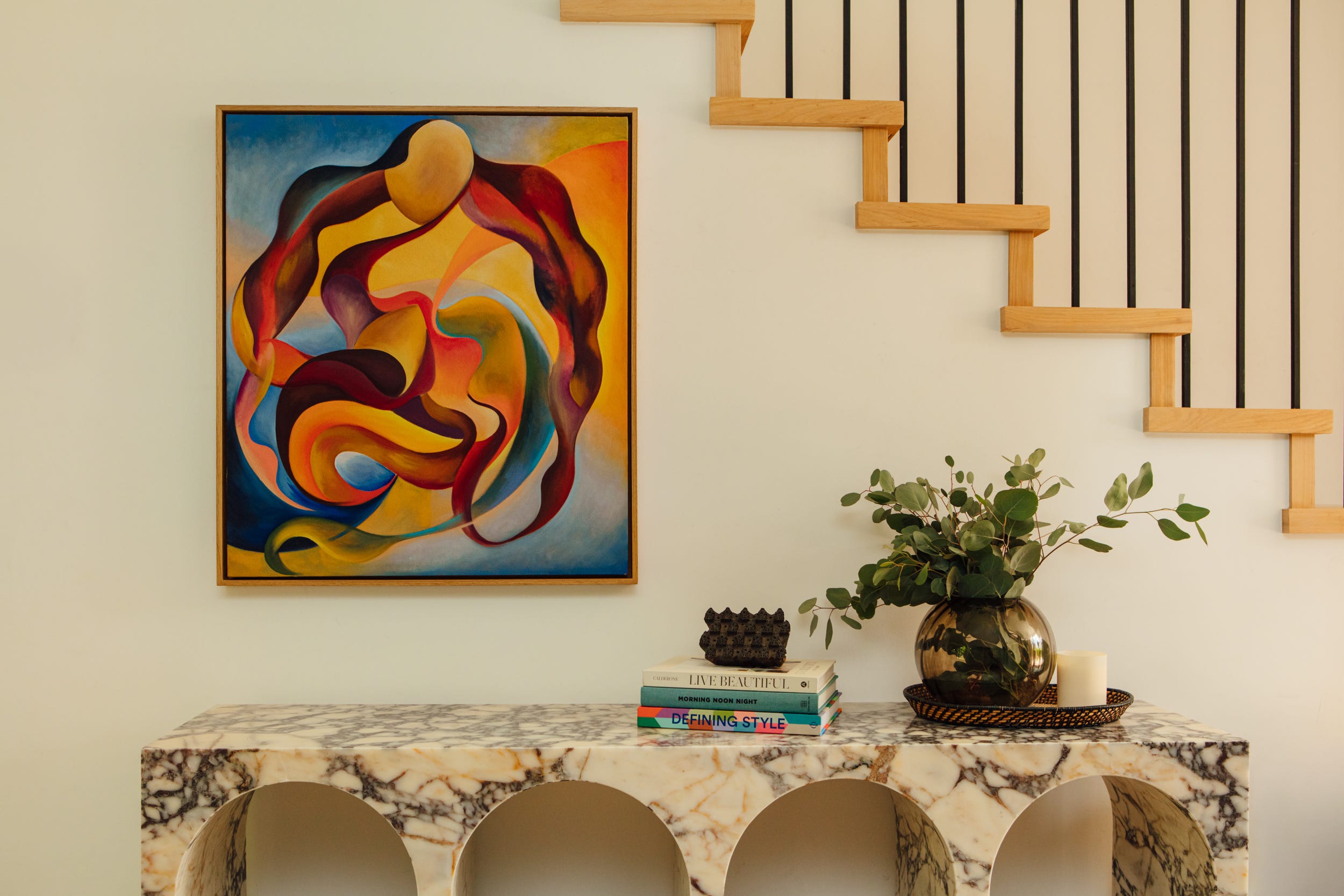
The entryway was the hardest wall in the house, and we looked at so many options for it. After every round, the client got clearer about the same thing. They wanted to open the front door and feel warmth and energy, a kind of glow.
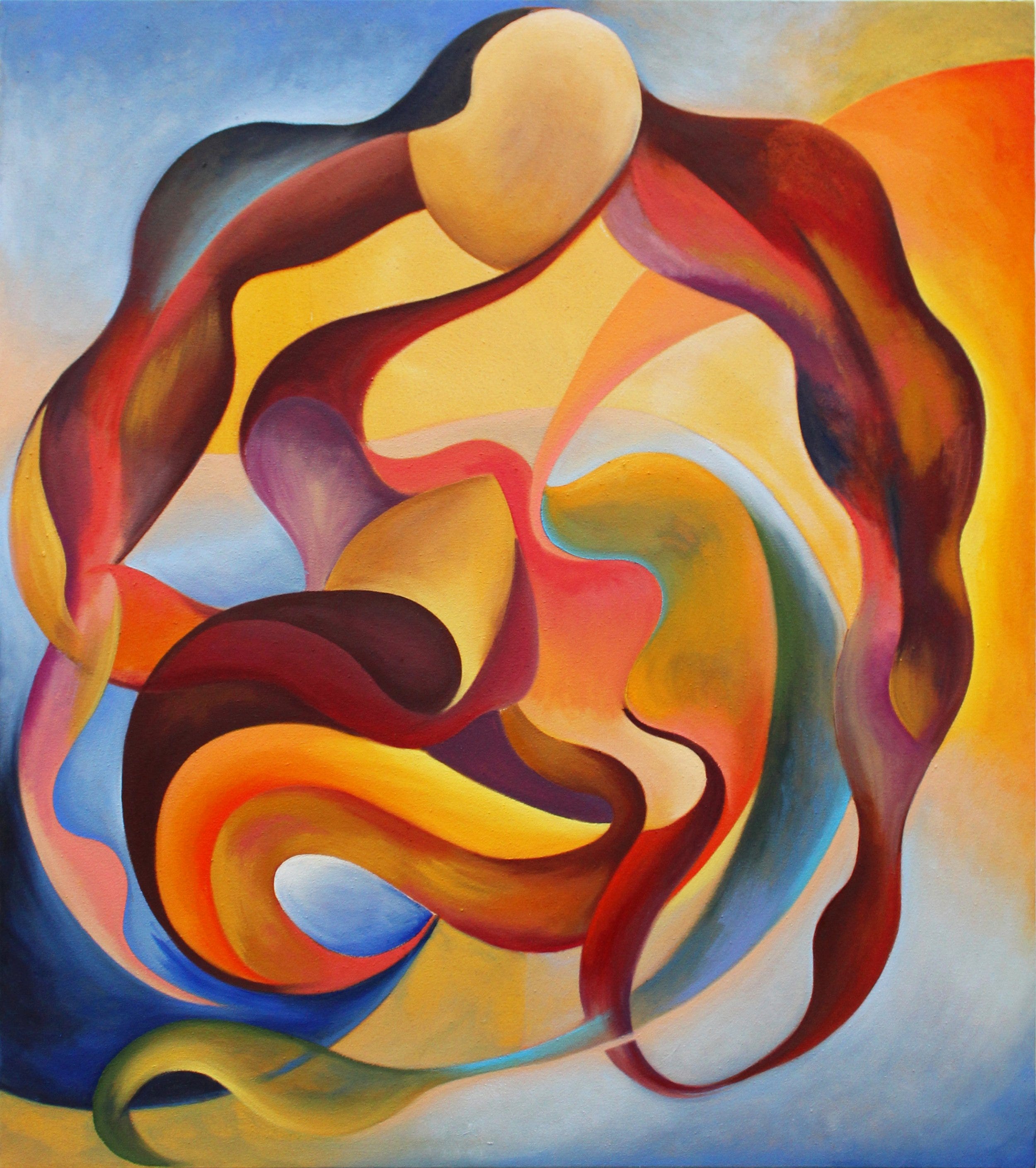
Alex Maceda’s two bodies in orbit finally did that. What I love about this one is that Alex’s work had been in the mix much earlier, and it wasn’t a yes then, so we kept looking. Months later, we came back to it and it was the easiest decision we’d made. I reintroduced Alex’s work one day, and they bought the painting the next.
The warm pinks, ochres and rusts, with soft blues running through them, gave the entry exactly the feeling they’d been describing.
I especially love it in relation to the Sarana Haeata upstairs. Sarana’s feels like the night version, moodier and cooler, and Alex’s feels like the sunny one, warmer and more open. They have a similar circularity and movement to them, but they are by no means the same work. And I love how they came together tying the various spaces together.
What changed
I’m not sure they would have called themselves collectors when we started. It can feel like a big word, and it can imply an acquisition strategy, investment value, art storage, and so much more. They were working slowly and intentionally to build a collection that feels like them, and in the process supporting incredible artists from around the world at various stages of their careers. They have works that range in material, story, and heritage - all the elements of a great collection without the pretense or stress.
Most importantly, though, they have a home that feels like them, filled with stories they love and a way to keep noticing, building, and falling in love with art wherever they go.
Photography by Tana Gandhi
If you liked this newsletter, please hit the ❤️. It helps more people discover my work.
Read on for more great art
What I’d Buy from the Fall Shows

Fall is in the air. From fashion week content to the first turning leaves to crisper mornings to pumpkin spice lattes and dare I say even a few holiday ads. It is time to cozy into what is absolutely the best season of the year.
What I’d Buy From Summer Group Shows

Summer group shows are categorically fun. Caught somewhere between the end of the spring solo season and the Fall openings, summer show are looser with galleries bringing together artists who might not otherwise share a room. They test new names, pull out smaller or stranger works, and take chances they may not take in serious buying season.
What I'd Buy Under $500

I was having dinner with a group of friends a few weeks ago, catching up on work, when I mentioned a recent project I had wrapped. A friend asked, “Okay, but can you get real art with fewer zeroes?”