
The Goods is my running list of what’s caught my eye lately: shows, essays, artists, decor. Some things will push your collecting eye, some will just be good to know, and all of them shape how I’m thinking about art right now. It all ties back to the idea that taste is a moving target. What matters is building the muscle to notice, and then notice again.
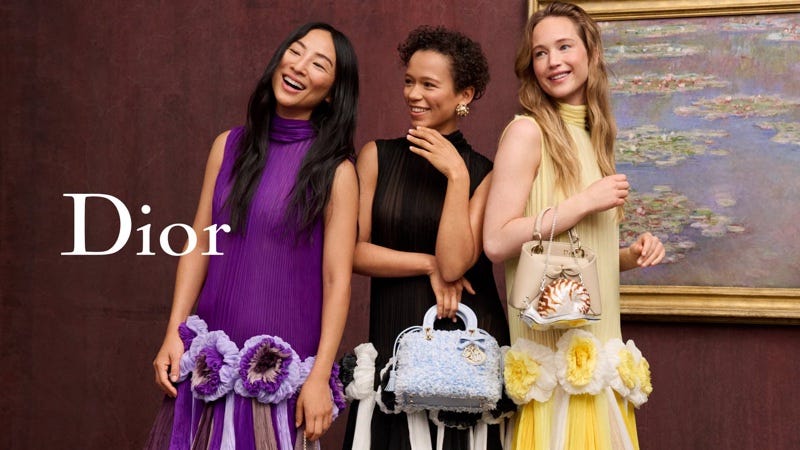
The latest Dior campaign featuring Jennifer Lawrence, Greta Lee, Taylor Russell, and Drew Starkey is filled with art easter eggs (h/t to Amelia Marran-Baden). The campaign was shot at the newly opened Geffen Galleries at LACMA (eagle-eyed readers will know this based on the color of the walls, which I previously wrote about here).
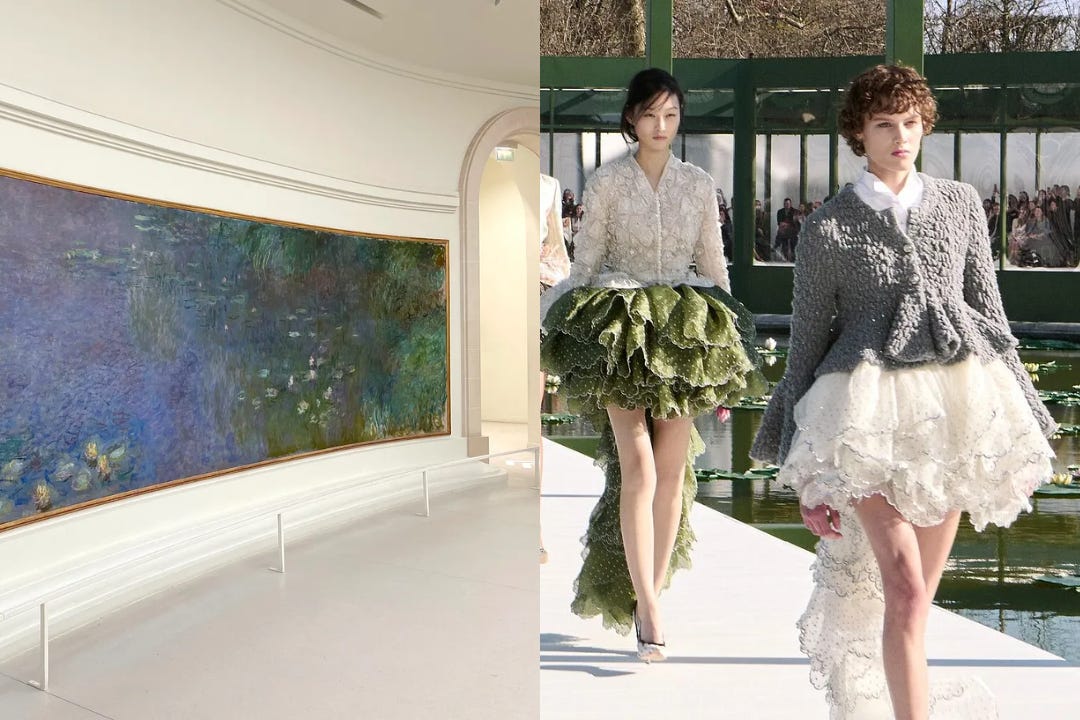
In the first image of the campaign (above), Monet’s water lilies behind the three ladies echo Creative Director Jonathan Anderson’s March show at the Jardin des Tuileries, where he created an ode to Monet’s work.
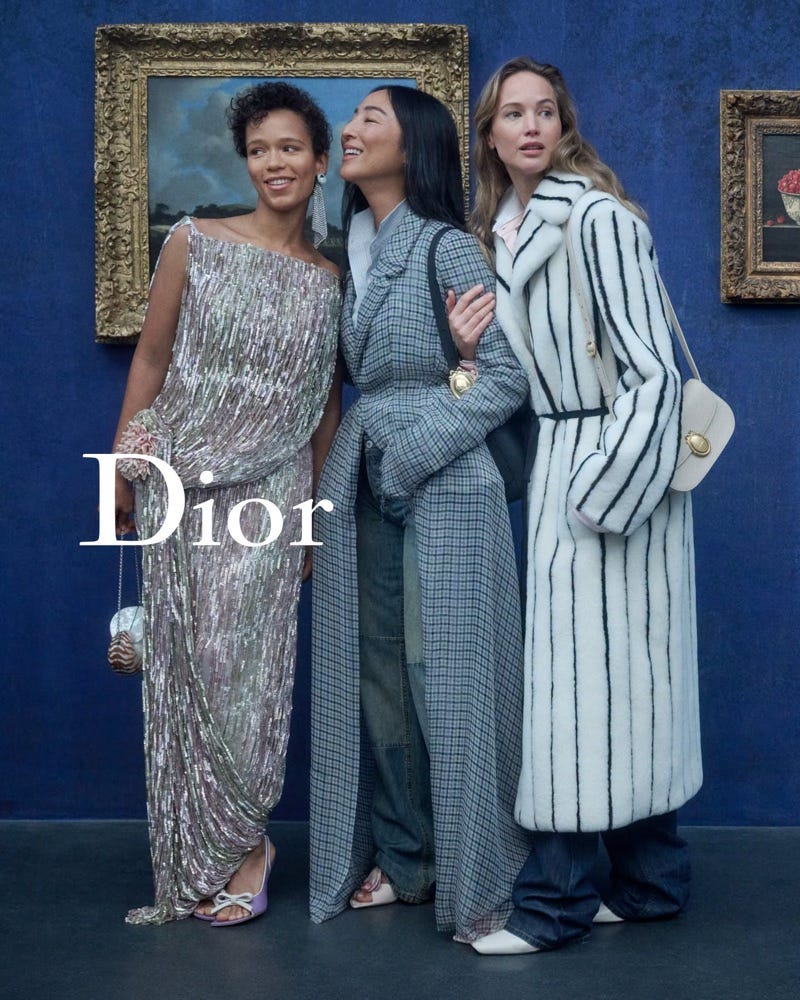
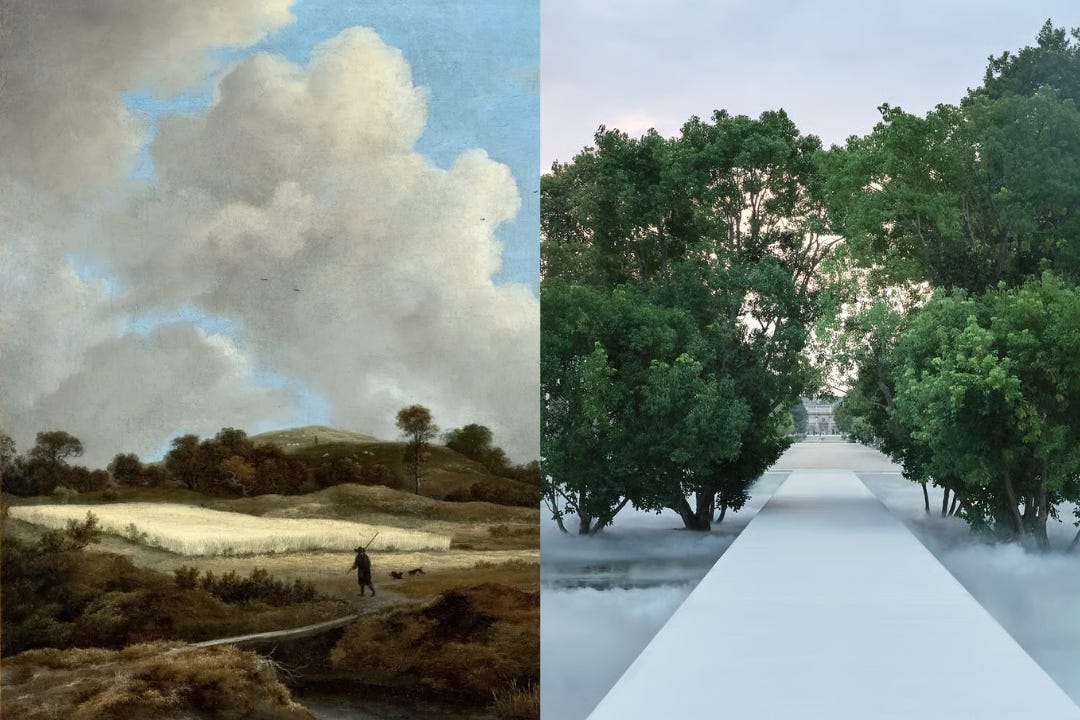
Ruisdael’s clouds (behind Russell and Lee above) feel like a connection to the mist rolling over his latest runway in Paris last month.
And Coorte’s strawberries (behind Lawrence) recall the Chardin painting at his men’s debut last summer.
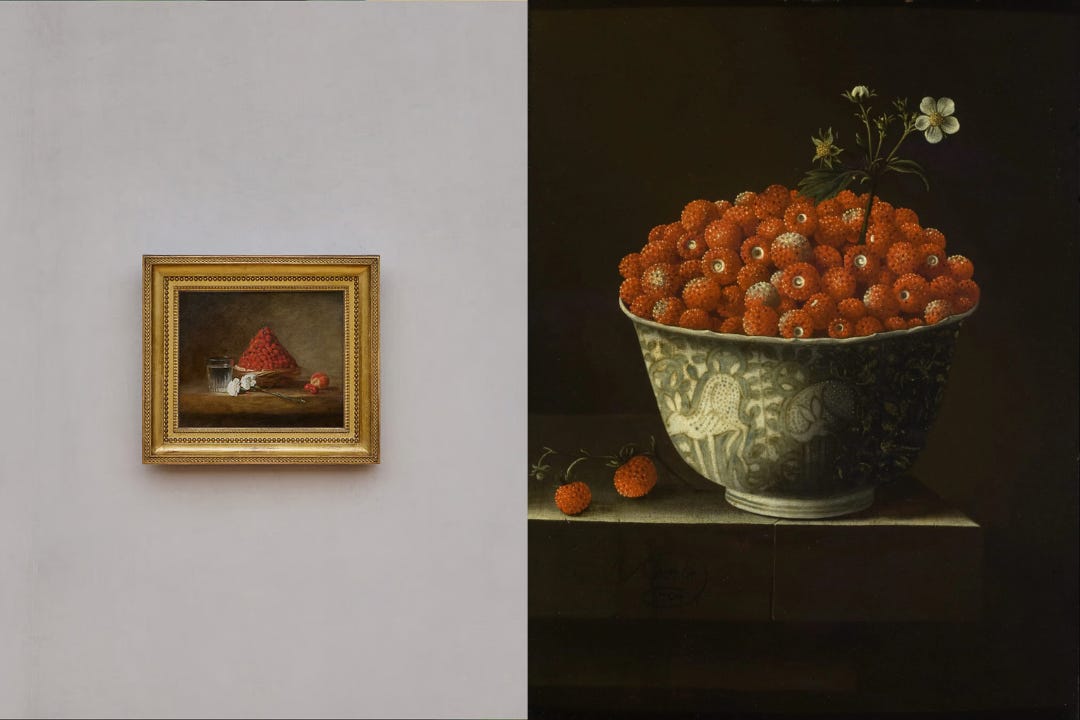
Anderson is a MASTER world-builder, and these connections are part of what makes his work so interesting to follow.
That got me thinking about three other shows from Fashion Week last month that brought art and fashion together just as thoughtfully. There were some spectacles, but to be included on this list, I had to love the fashion too.
1. Kallmeyer × How to Wrap Five Eggs
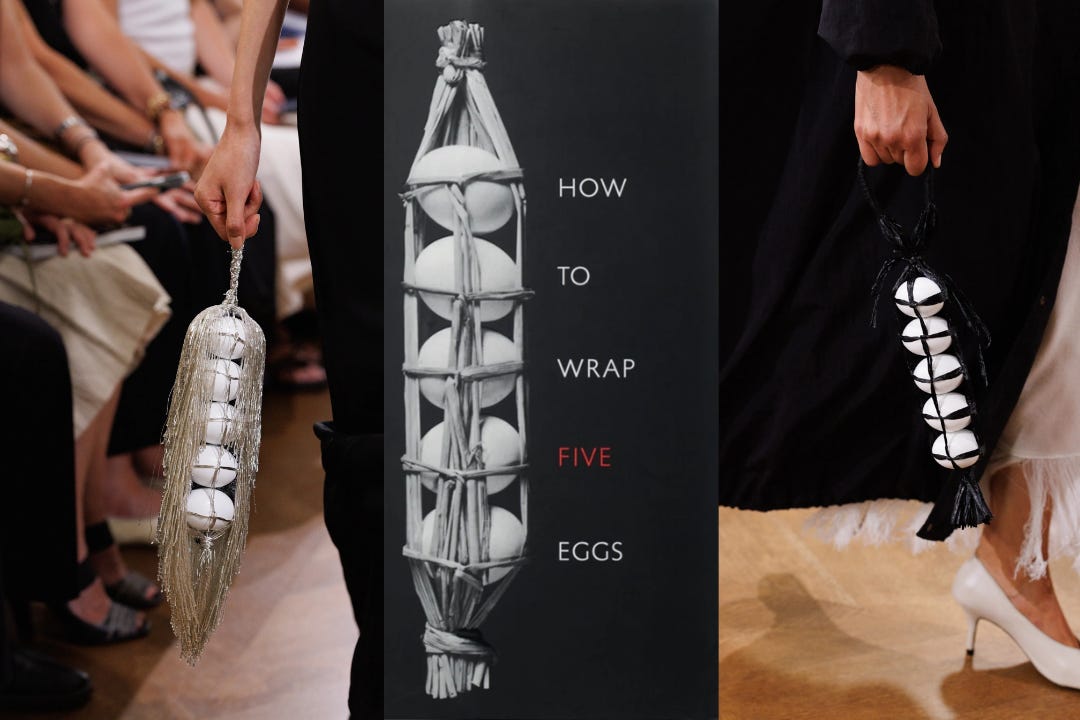
Danielle Kallmeyer has been an under-the-radar fashion favorite for years and is getting harder to miss. Her clothes are like works of art that are nuanced, considered, and filled with details that you have to take the time to notice.
Her Spring/Summer 2027 collection, shown last month, was inspired by a cult-classic Japanese design book, How to Wrap Five Eggs, which features the resourcefulness of Japanese packaging before mass production. Made from mostly natural, readily available materials, such as bamboo, rice straw, hemp twine, paper, and leaves, that packaging could carry and protect almost anything. Kallmeyer took this as inspiration and considered the ways bodies could be wrapped, clothed, and draped, mixing silhouettes, materials, textures, and proportions to create something equally ingenious and simple.
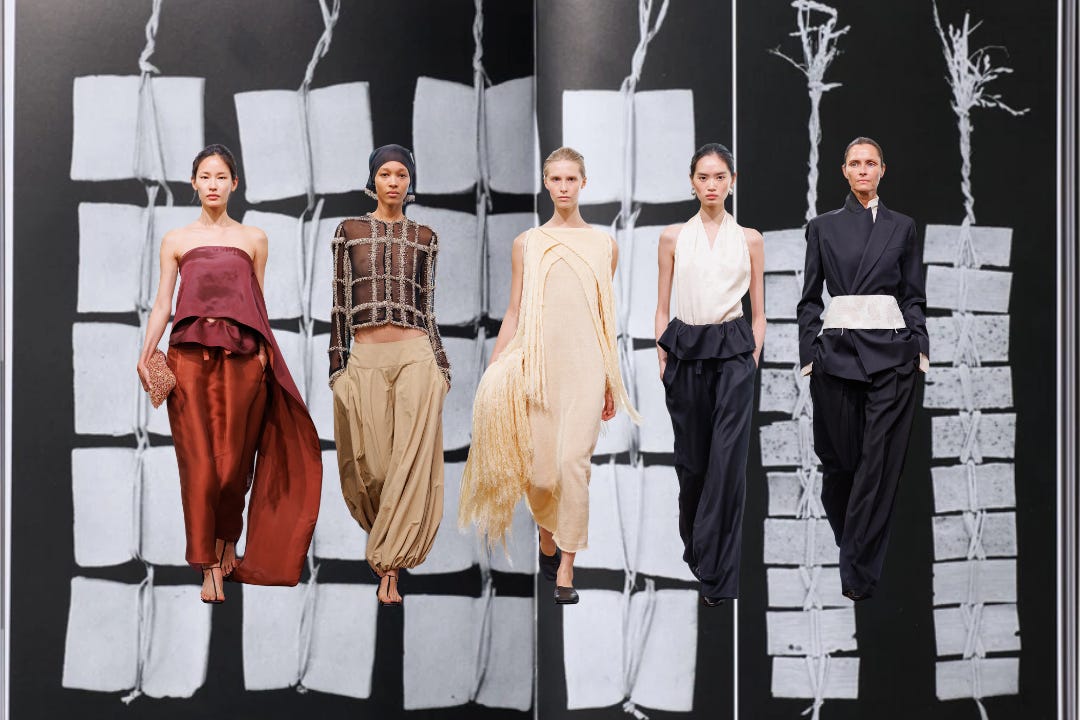
She, of course, included not one but two homages to the egg carriers. She also took the theme down to the smallest details. Even the hair, styled by Mara Roszak, founder of Rōz, was wrapped, tied, and sewn, inspired by how twine was used to bundle and carry small fish.
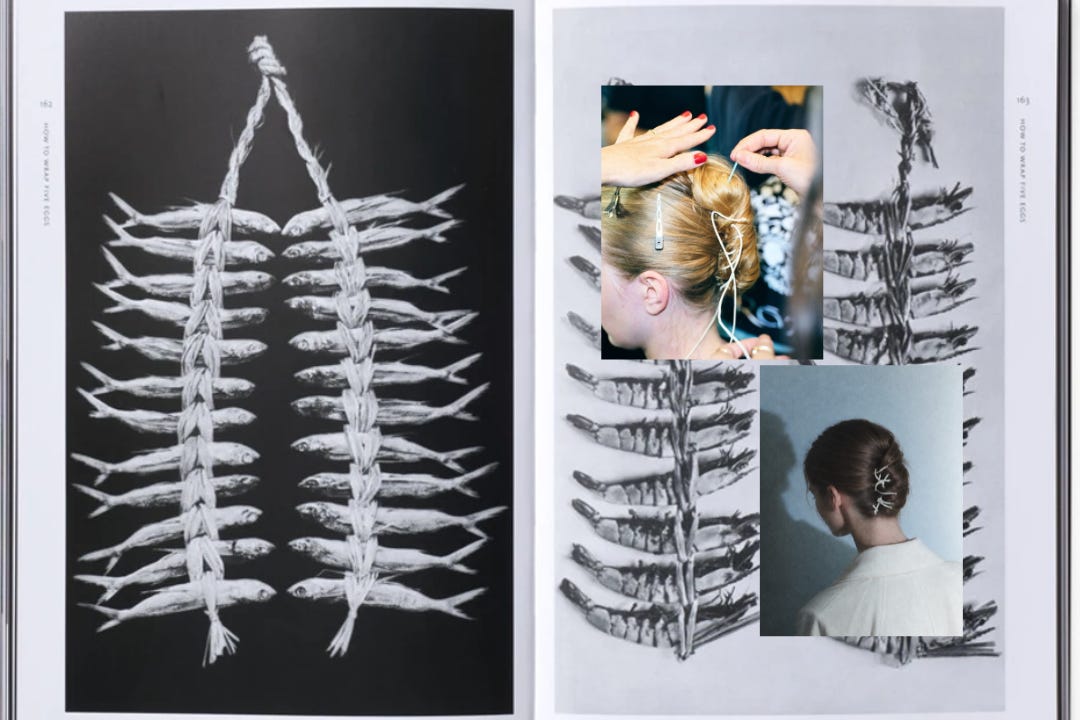
I love how the inspiration came to life across the clothes and styling. It’s the rare collection where the inspiration isn’t on the surface. It’s in how everything is made.
2. Rachel Comey × Rosalyn Drexler
I love Rachel Comey’s clothes because they feel believable and still aspirational. For her 25-year anniversary show, Comey chose to highlight Rosalyn Drexler, the Bronx-born pop artist, novelist, playwright, and pro wrestler (as Rosa Carlo). Comey shared, “I thought she was a perfect diversion from reflecting on 25 years… and at the same time, a nice focal point: a woman that you know had this interesting life.”
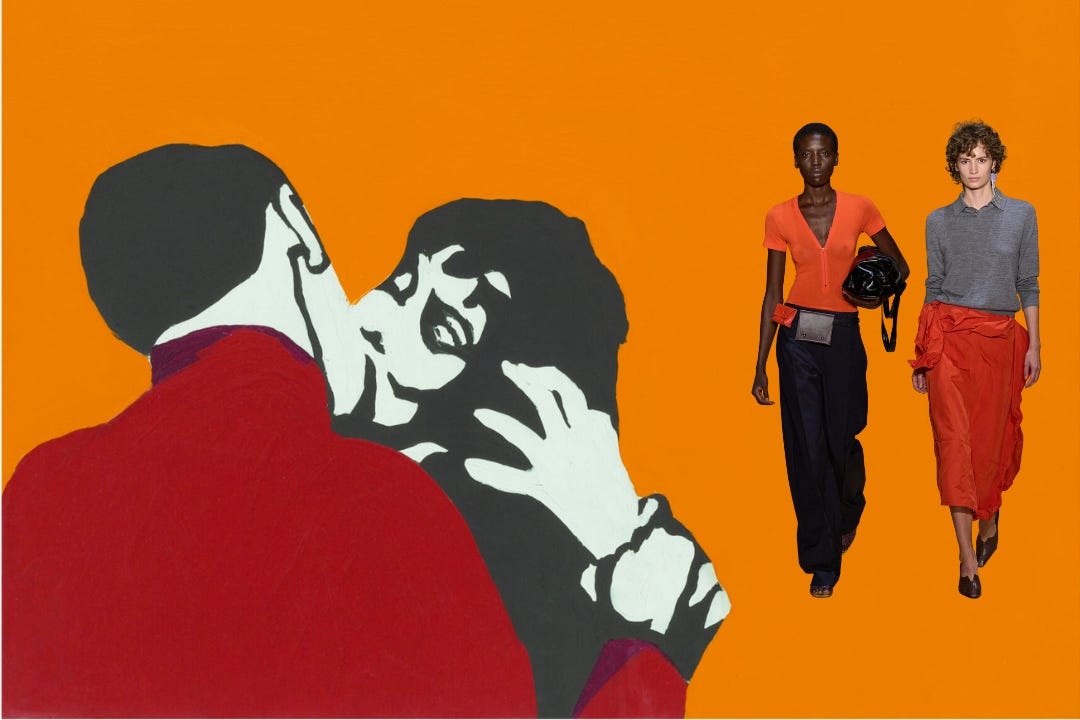
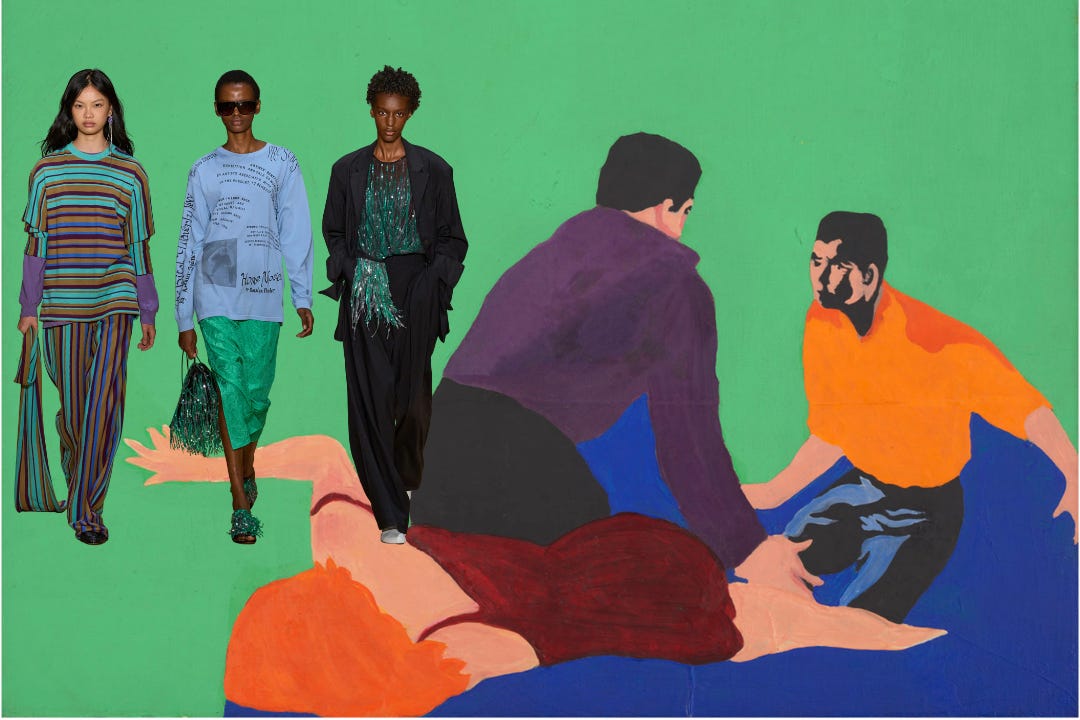
Drexler’s work is currently on view in her first posthumous exhibition, “My Life Has a Life of Its Own,” at Garth Greenan Gallery in New York (through October 24). Comey sent looks down the runway inspired by the bright, saturated colors of Drexler’s art. Drexler’s colors feel as right for the moment as they did when she painted them.
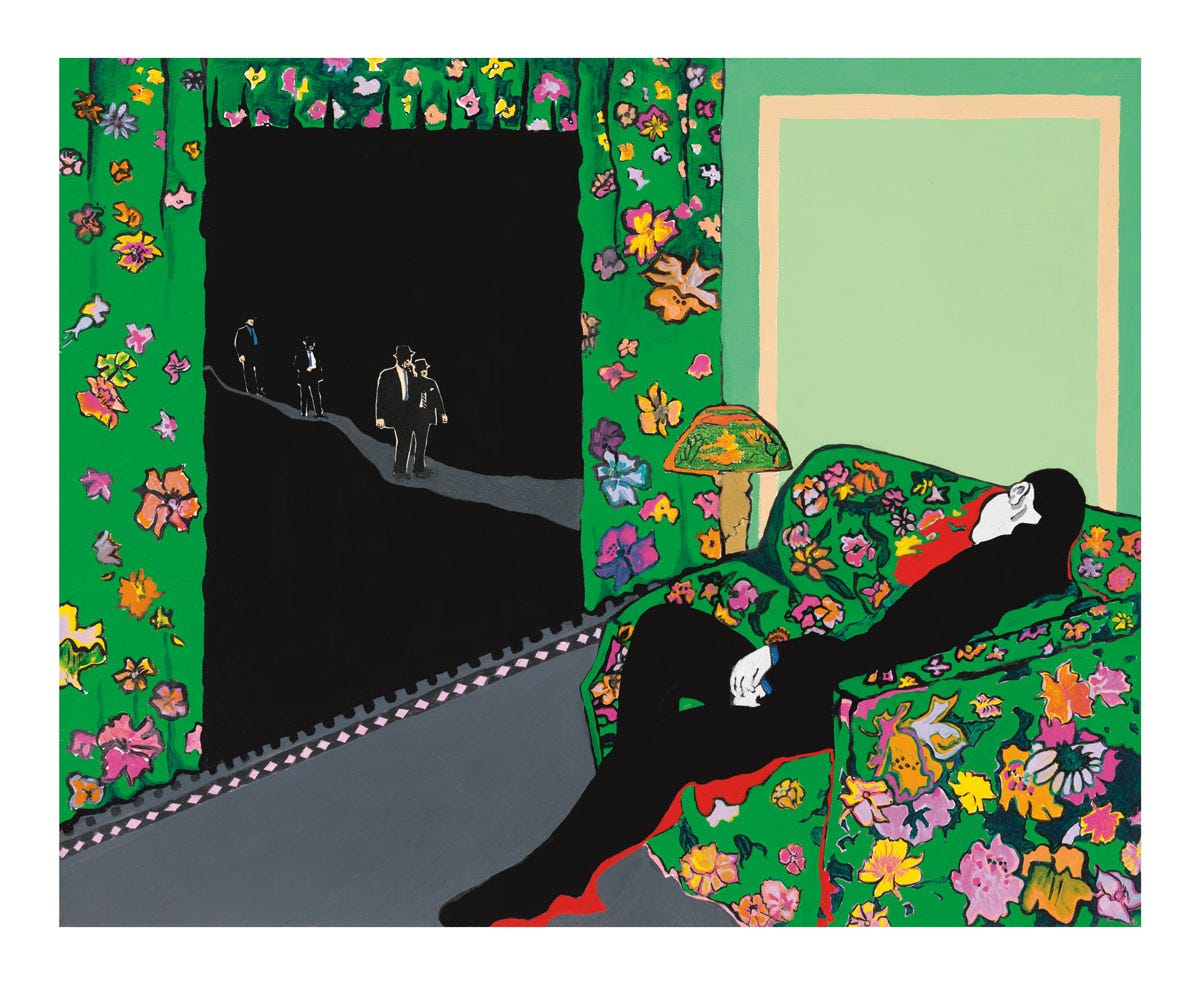
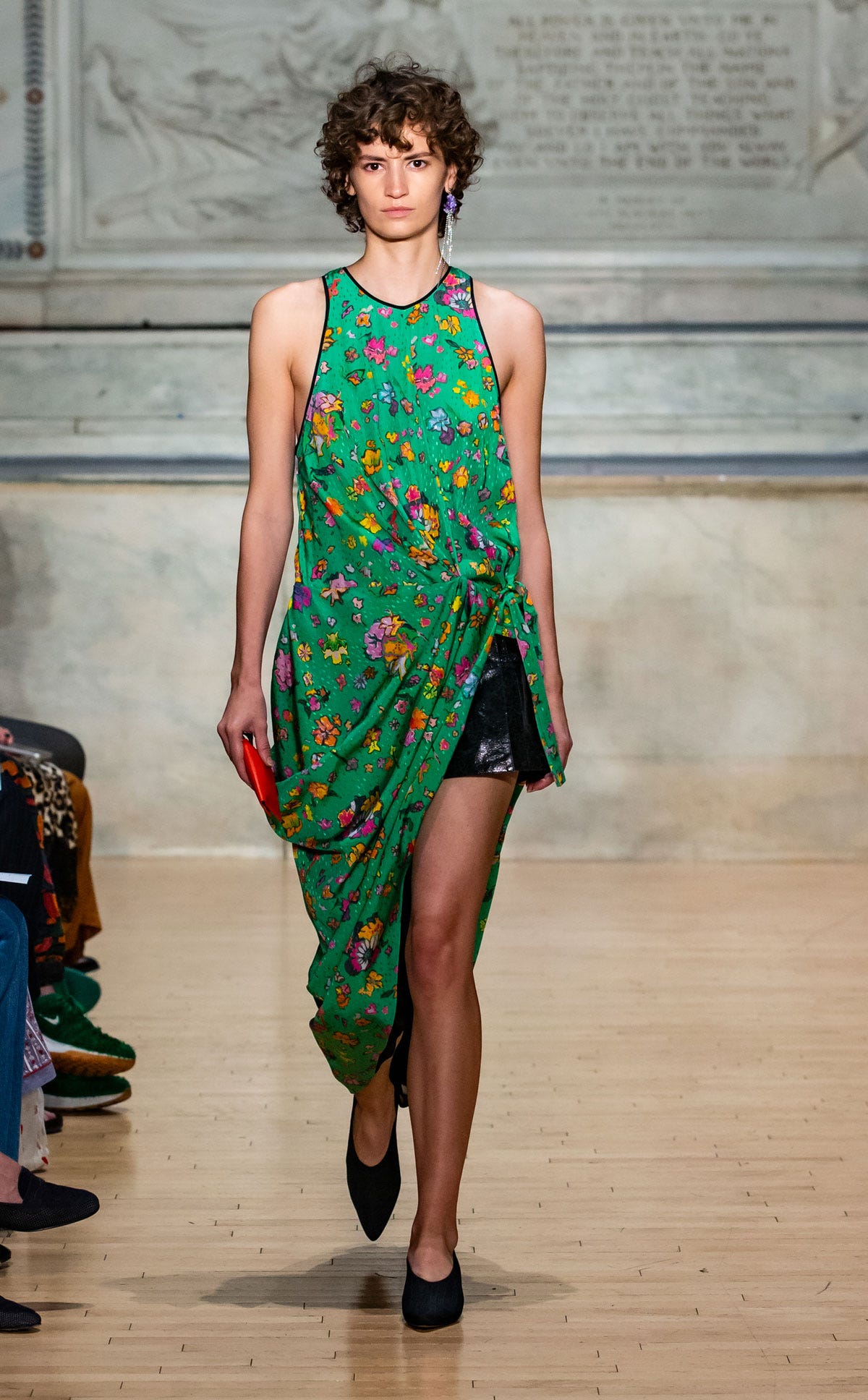
What I love about this dress is that something so beautiful and summery has such a dark source. Comey nods to that in the styling, layering it over leather shorts. The print is the couch from Night Visitors, which Drexler painted from the crime-scene photo of mobster Bugsy Siegel, shot dead on a floral sofa.
Comey takes Drexler’s passions, values, and artistry and filters them through her own eye, creating clothes for a modern-day Renaissance woman.
3. Simone Rocha × Caravaggio
This collection is built around the incredible 1990 rediscovery of Caravaggio’s The Taking of Christ. Caravaggio painted the work in 1602 for the Roman nobleman Ciriaco Mattei. Somehow it lost its connection to the artist, was wrongly attributed to the Dutch painter Gerard van Honthorst, and spent more than a century in a Scottish collection before landing in the 1920s with an Irish pediatrician, Dr. Marie Lea-Wilson. In the early 1930s, she gave it to the Jesuits in Dublin, where it hung in their dining room for nearly 60 years until Sergio Benedetti, a senior conservator at the National Gallery of Ireland, realized it was the “lost” Caravaggio.
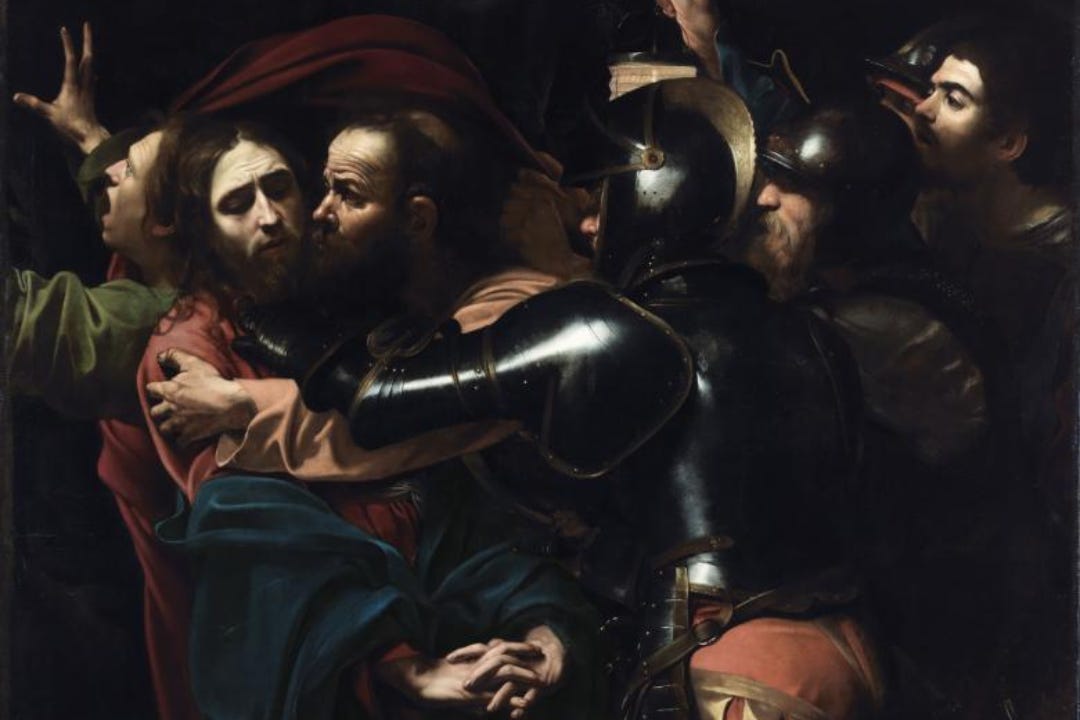
Rocha, who was born in Dublin, showed the collection at the Old Bailey, London’s criminal court, a fitting venue for a collection inspired by a painting of an arrest. Rocha took this extraordinary story and pulled many of the threads that make it so sensational into her work. Caravaggio is best known for his use of chiaroscuro (Italian for “light-dark”), and the show’s color palette borrowed heavily from his rich reds, black, and petrol blue set against bright whites. Velvet, tulle, and lace gave it the same depth.
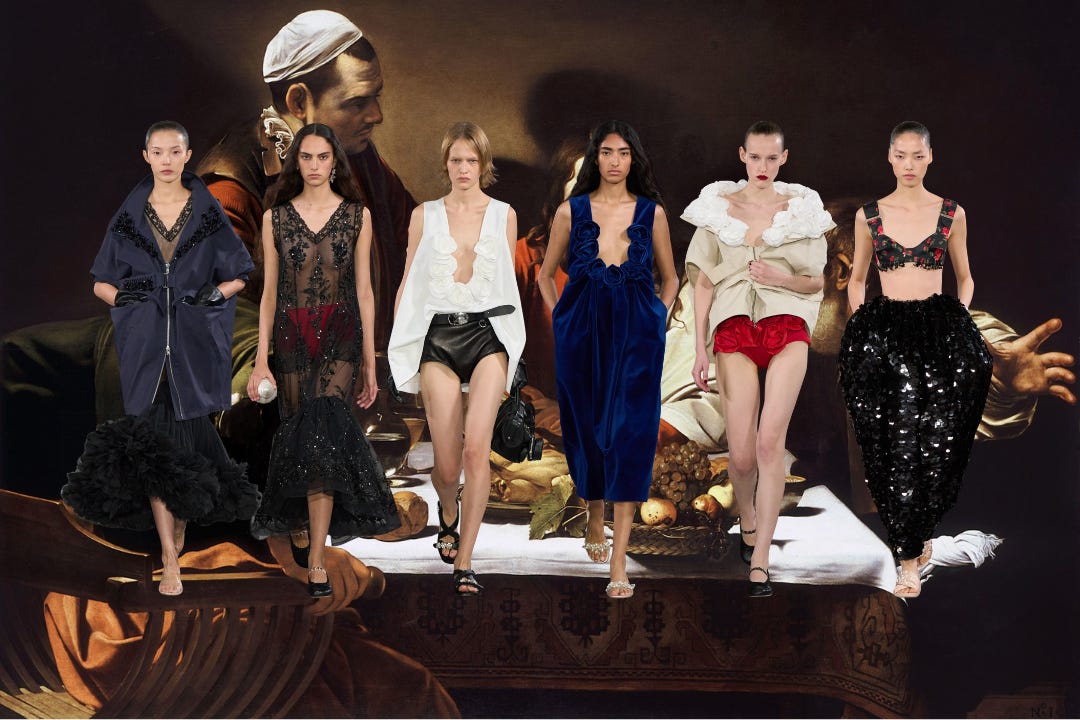
The show opened with one of my favorite looks, a dark navy trench in a deep Caravaggio blue over a full tulle skirt with a feathered boa hem and sheer lace top. From there, Rocha continued to play with color and texture, blending and pushing the boundaries between masculine and feminine silhouettes as she always does. The rosette collars, some framing deep V-necklines, others on jackets, reminded me of the ruffs in Caravaggio’s era, but reimagined with fierce modernism and often paired with short leather knickers or hardware to create more tension and structure.
Reflecting on the show, Rocha said she wanted to find “the most beautiful thing in an unexpected place.” The inspiration was felt throughout the show, but in a way that made it feel like a discovery, which is exactly what the painting was.
Each of these designers found beauty, joy, and awe in the everyday by remixing art, trends, and their own stories. And taking the time to notice what moves us, why, and how we interpret it is the best part of it all.
If you liked this newsletter, please hit the ❤️. It helps people discover my work.