
One of the reasons I started LOTA was that I kept thinking about South Asian art. Here was a culture so steeped in craft, artistry, and visual language, and yet it was surprisingly hard to find contemporary versions of it. So it has been incredible to watch the excitement around South Asian art grow, both within the region and outside of it.
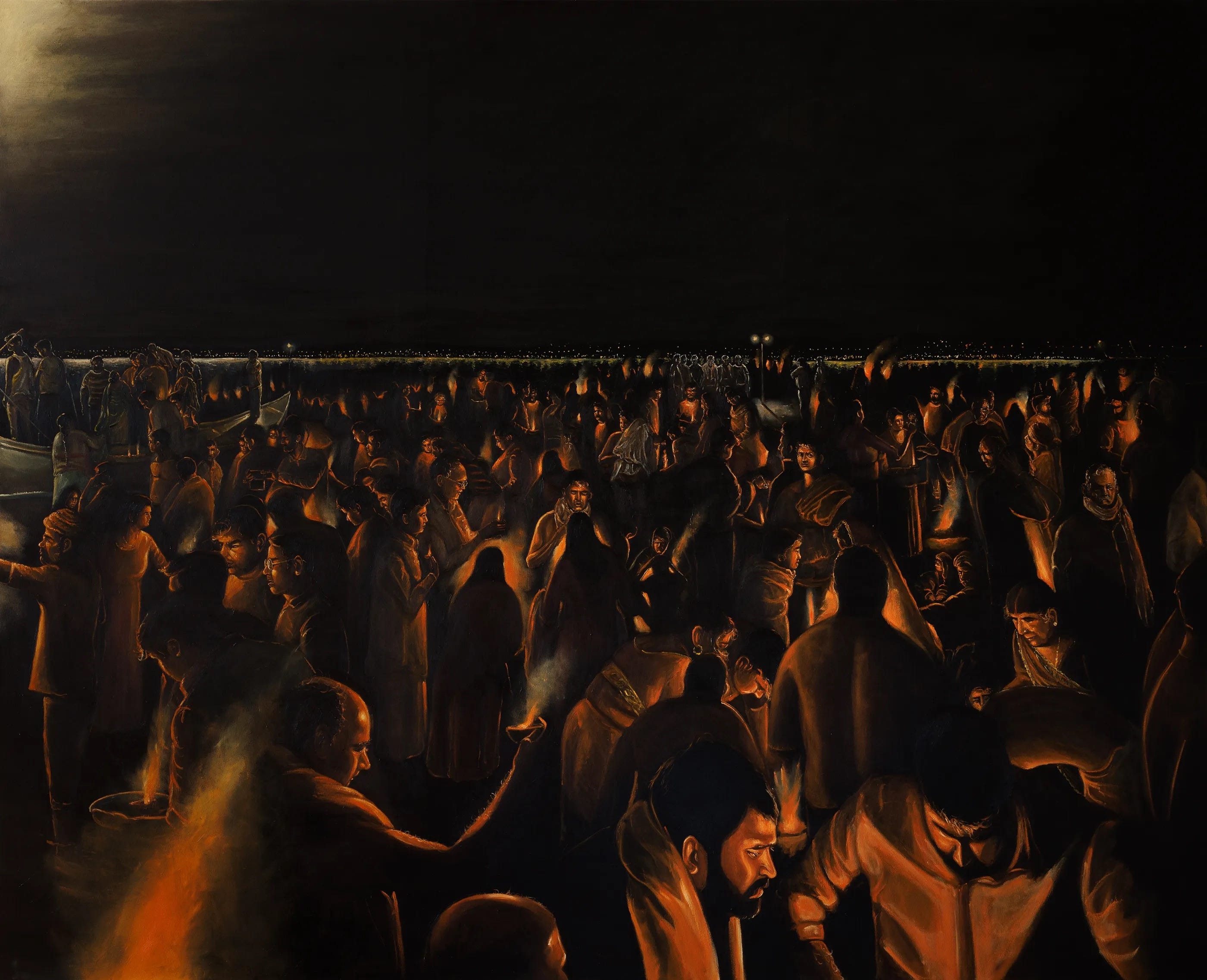
Last week, I went to the opening of Raghav Babbar’s show at Rajiv Menon Contemporary in LA, and the work has stayed with me. At first, I was struck by the combination of an Indian eye on the Maha Kumbh Mela, painted with classical European impasto and something dark and Goya-like in the light. But the longer I sat with the work, the more I realized it was the details that had won me over. The light and color were marvelous, but it was the people who pulled me in. I felt a rush of familiarity - I knew that gesture of a man with his hand tucked behind his ear, the elder woman with her white spiraly hair coming out of her bun with a look of concerned hope, the young boy trying to please the elders, squeezing his eyes so tight hoping he doesn’t break out of his performance.


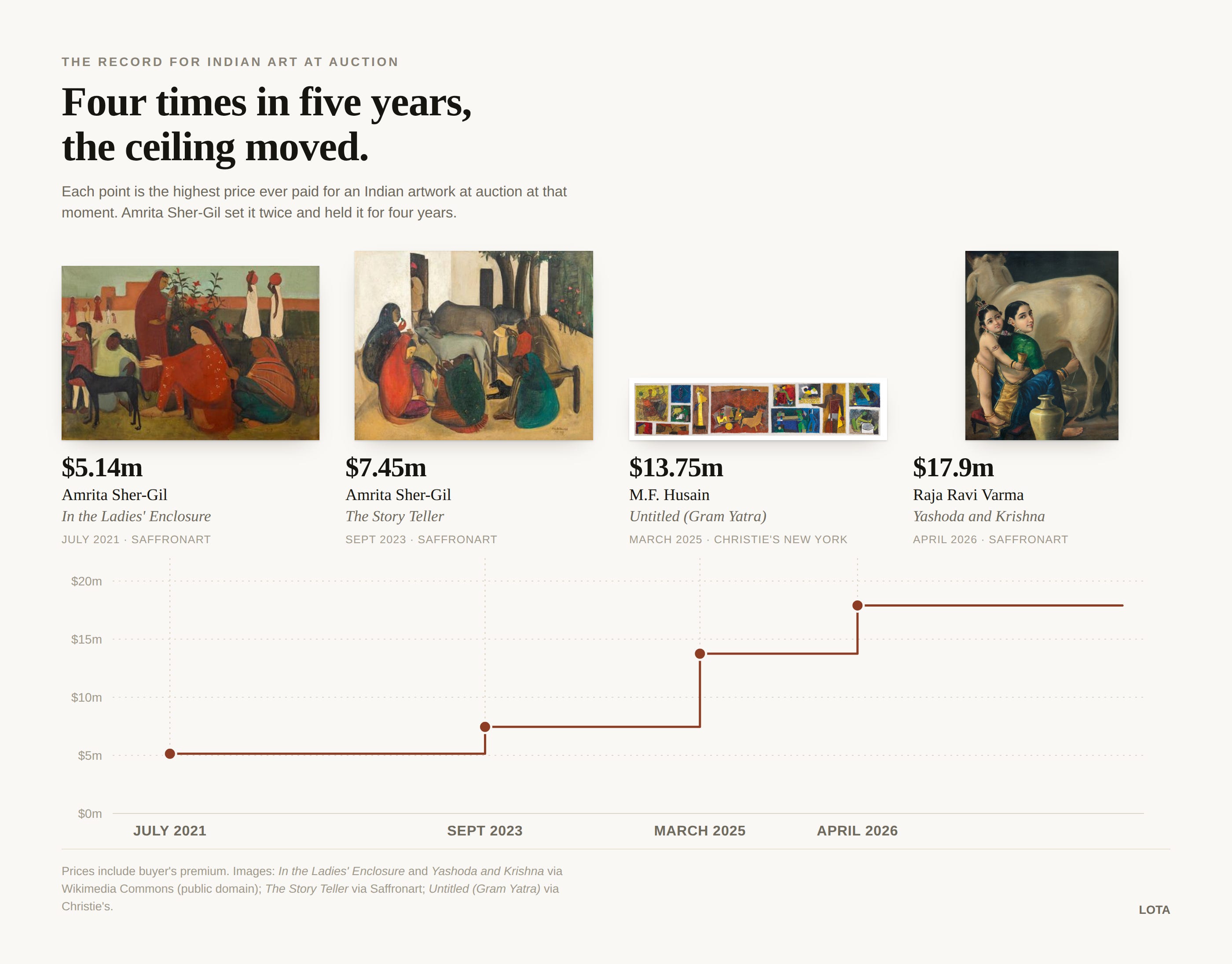
It isn’t only me noticing. The South Asian art market is getting more interest broadly. Take a look at the top of the market, which to be fair is driven by fifteen to twenty people worldwide:
And then yesterday, Christie’s ran its South Asian Modern and Contemporary Art sale in New York with 112 lots. Every single one sold, for a total of $17.6M at hammer price against a low estimate of $7.3M.
Two terms worth knowing: the hammer price is what a work actually sells for, and the estimate is what the house predicted beforehand, based on past sales and demand. So a sale coming in at nearly two and a half times its low estimate, with nothing left unsold, is a real signal.
Take Ganesh Pyne, who was in that sale four times. An ink drawing he made as a teenager, estimated at $5,000, sold for $65,000. A major painting from 1986, estimated at $250,000, sold for $900,000.
The pattern held across the sale. When I sorted the works by estimate, the more accessible end outperformed the expensive end:
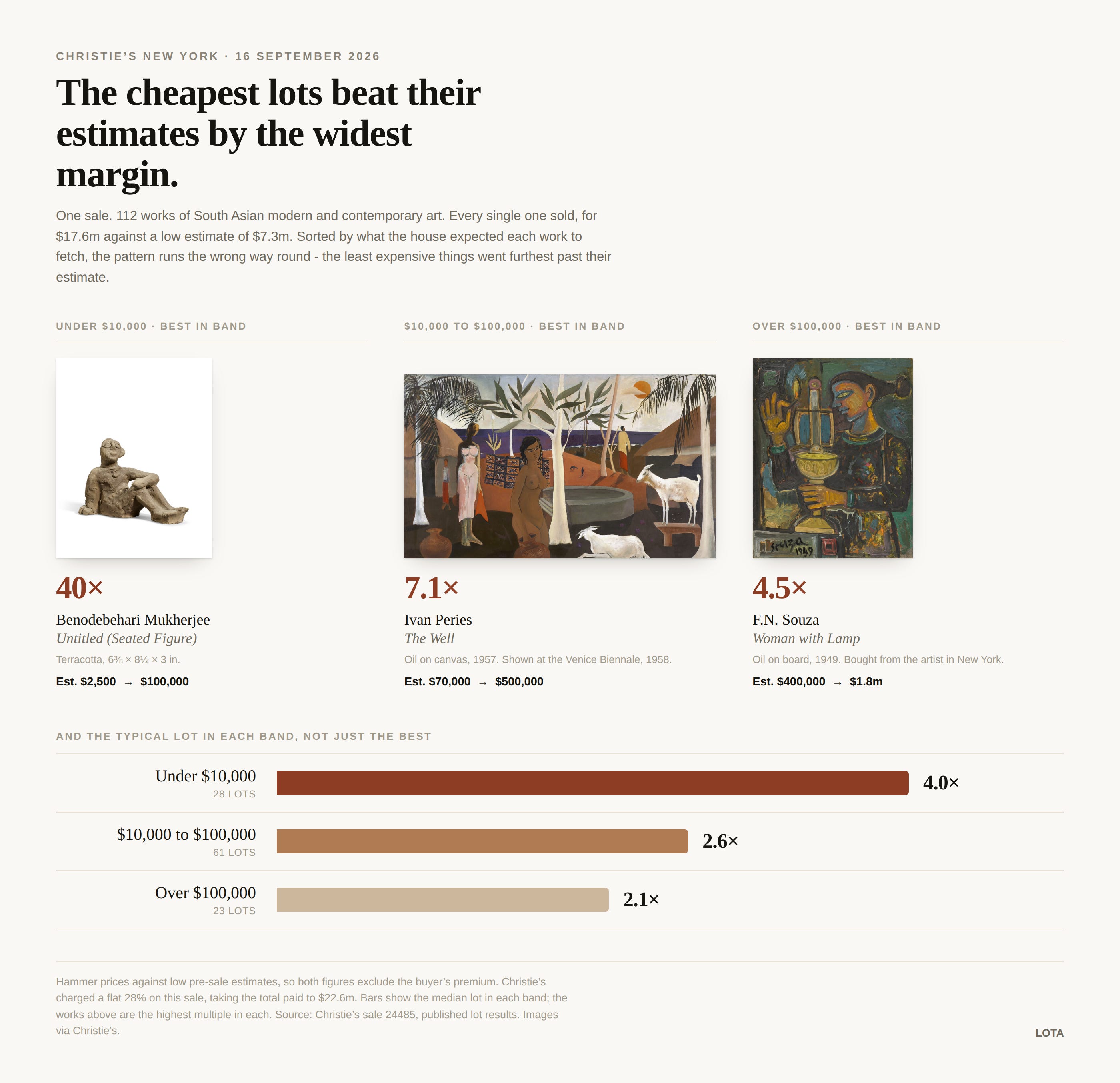
I don’t think that means buy cheap and hope for a good sale. I think it means the part of the market you can buy into is the part that’s moving, which is exciting.
As I started to look through the fall calendar, I noticed how many South Asian artists had significant shows opening. Not flooding the marketplace, but enough to give us a real look at the landscape.
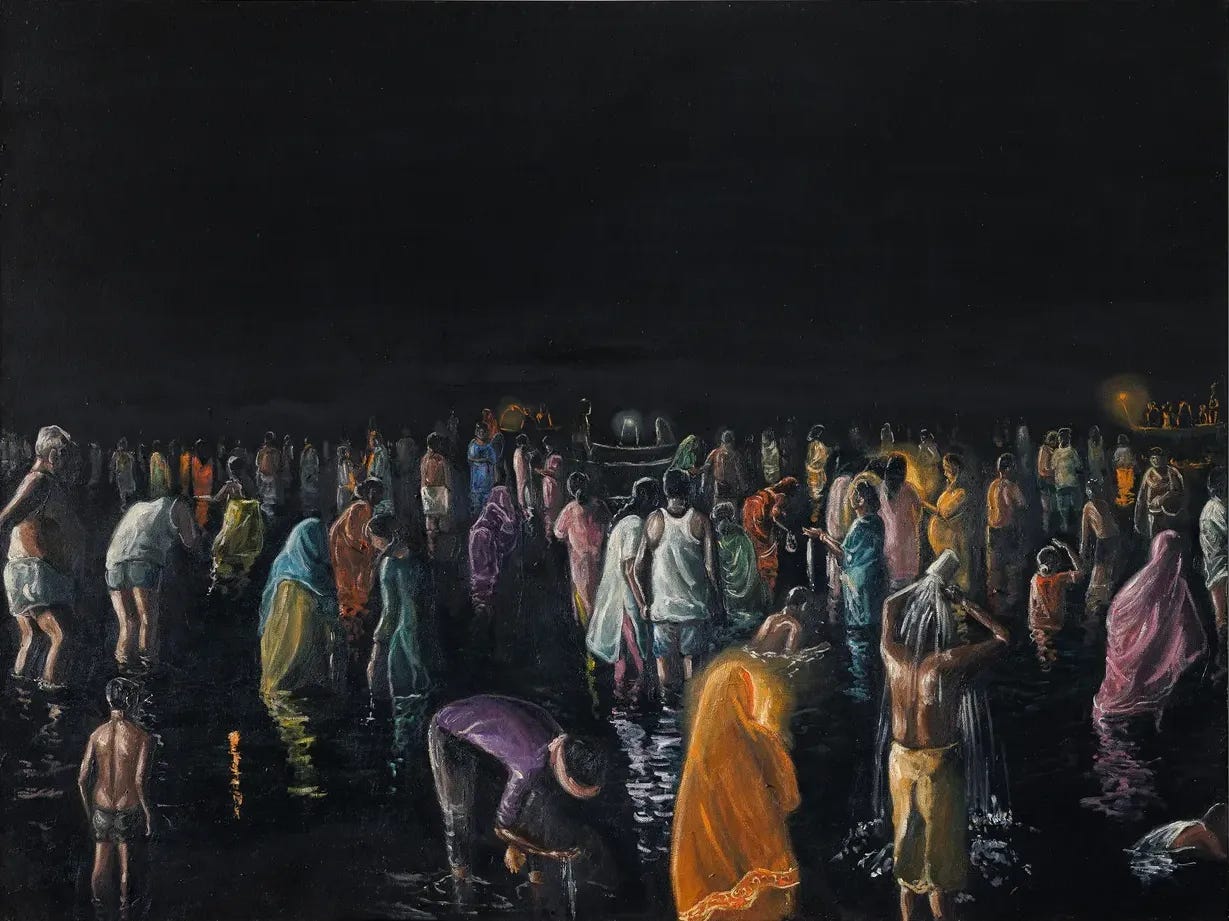
Raghav Babbar, Sangam
Rajiv Menon Contemporary, Los Angeles · through October 24
Practice: India-born portrait painter, trained in Singapore and London, known for closely observed figurative work. This show comes out of the crowds at the Maha Kumbh.
Why now: He’s 28, and this is his first US solo exhibition, followed by a solo booth at the Armory, September 24 to 27.
Institutional signal: Already held in five institutional collections, including the Kiran Nadar Museum of Art and ICA Miami.
The Maha Kumbh Mela in 2025 was reported to be attended by 660 million people, the most ever recorded. I love seeing Babbar sharpen his perspective and bring us into the experience without getting lost in the vastness of it. He holds space for expression to flow through people with their faces hidden or far in the background.
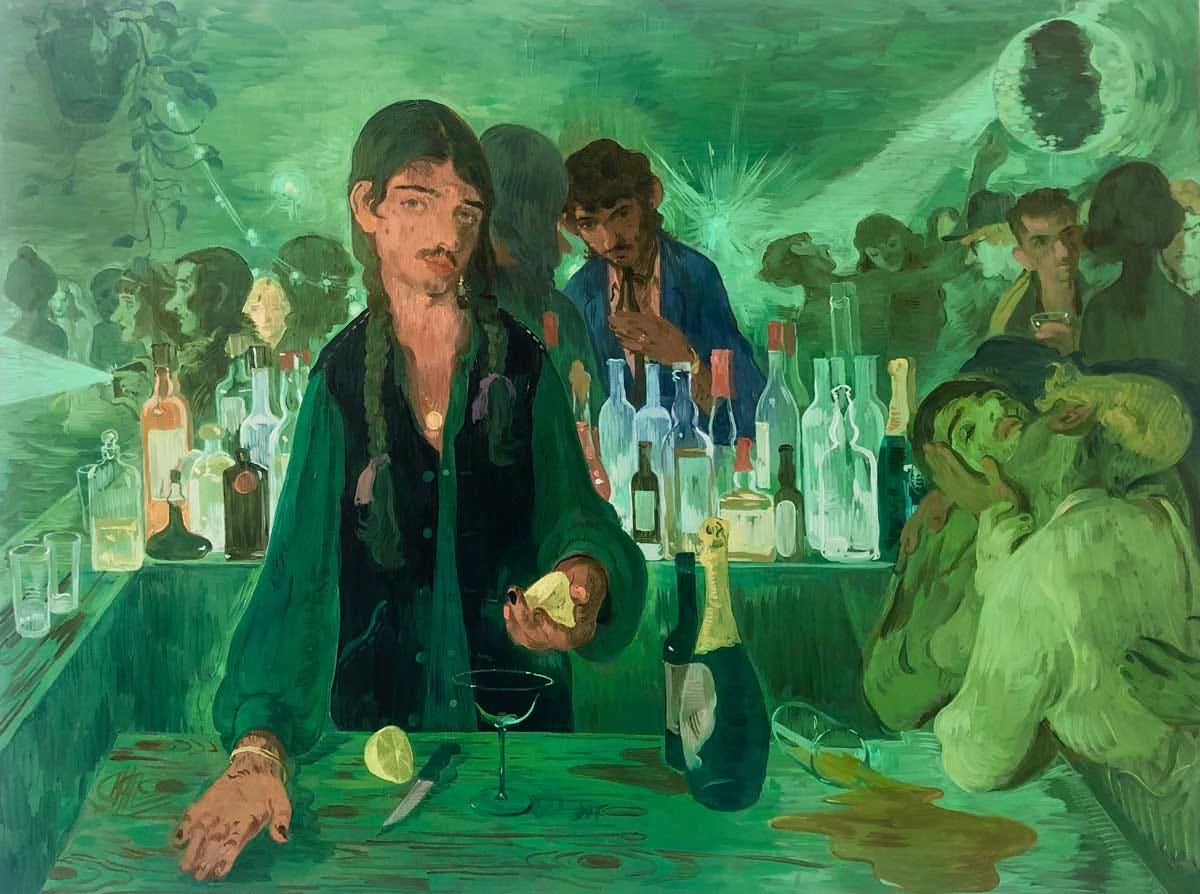
Salman Toor, Someone Like You
The Courtauld, London · October 2 to January 10
Practice: Paints the social and private lives of young queer brown men in bars, apartments, parties, border queues, imagined rooms.
Why now: Nineteen paintings made since 2019, his first solo exhibition in Europe, with a separate room of drawings.
Institutional signal: Loans for this show come from the Whitney, the Guggenheim and the National Gallery; his work is also held by the Met and Tate.
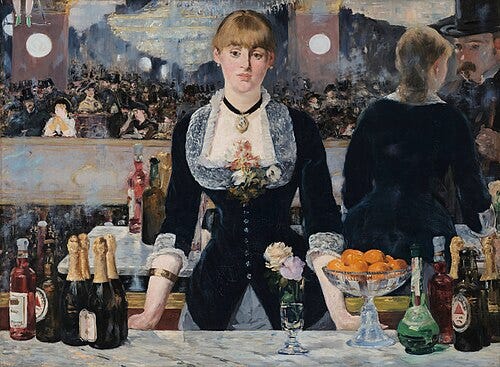
In The Bar on 13th Street, Toor reimagines Manet’s A Bar at the Folies-Bergère. The Courtauld owns the Manet piece as well, so you can look at the original and then see how Toor has reimagined the work with a distinctively modern lens. I love how Toor paints these emerald wonderlands that are so deeply human and whimsical at the same time.
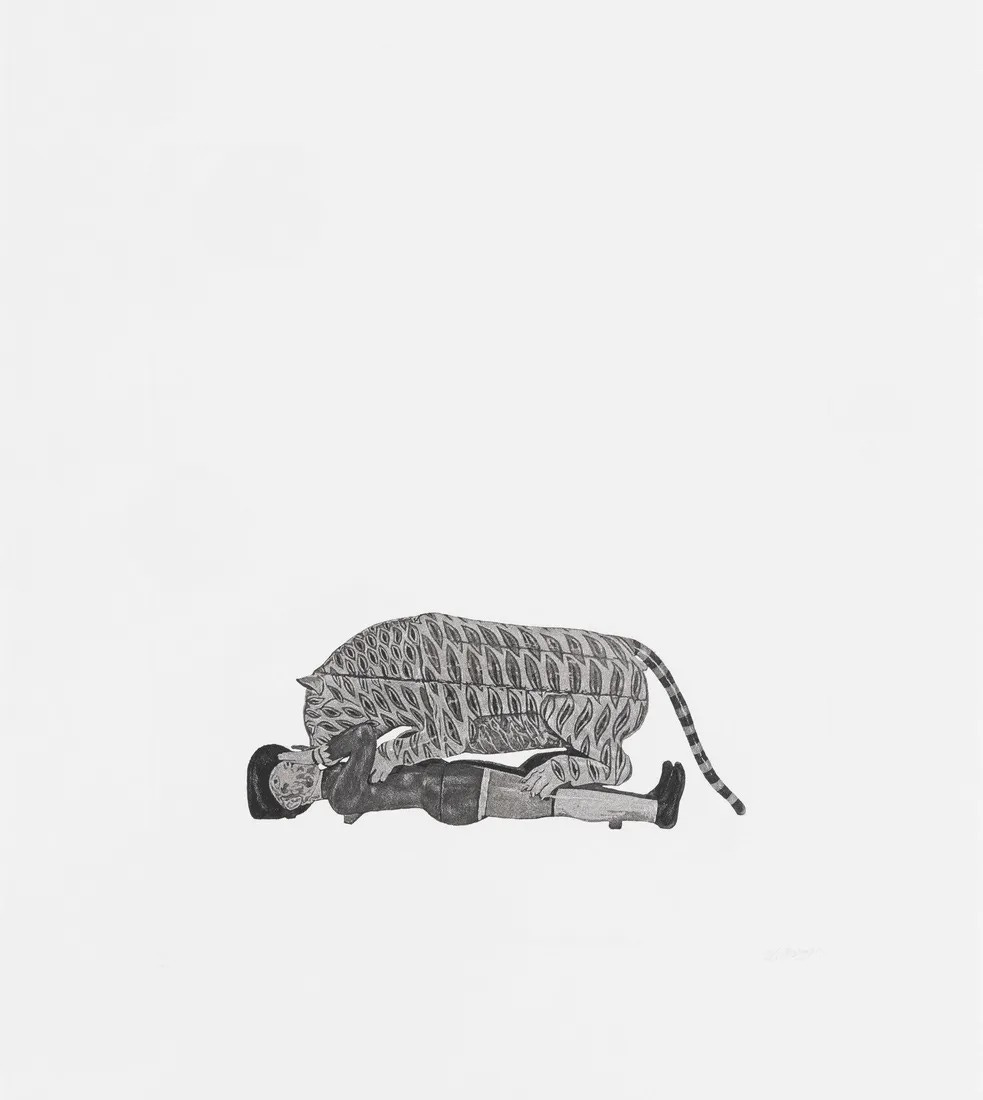
Ali Kazim, Alphabets
Cristea Roberts, London · closes October 3
Practice: Lahore-based, working across painting, drawing and printmaking, often using historical objects to examine memory and cultural displacement.
Why now: Nineteen etchings, each built around a different letter of the Urdu script and anchored to an object rather than a word. It closes October 3, and it’s a print portfolio rather than unique work.
Institutional signal: Held by the British Museum and the Metropolitan Museum; solo exhibition at the Ashmolean in 2022.
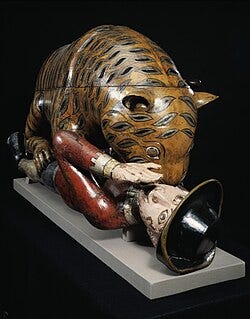
An alphabet is the first thing you learn and Kazim’s work serves as a reminder of the urgency of not losing your native tongue in the face of assimilation and migration. Tipu’s Tiger is the automaton the British took from Mysore in 1799 and is now housed in the V&A.
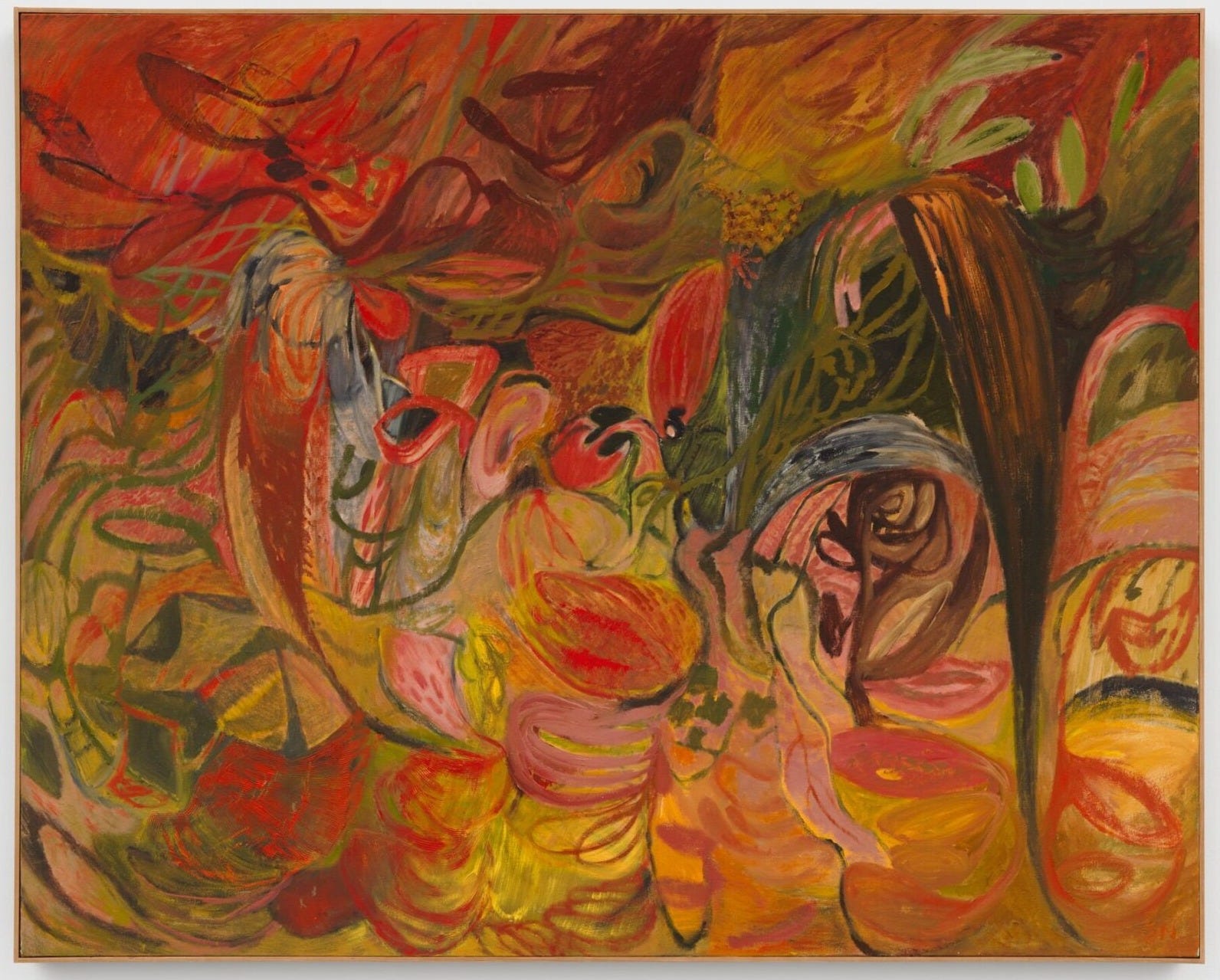
Soumya Netrabile, Field Conditions
Anat Ebgi, New York · through October 17
Practice: Moves between landscape and abstraction through dense brushwork, compressed space and layered color.
Why now: Her second solo exhibition with Anat Ebgi, bringing glazed terracotta alongside the paintings. She came to painting relatively late, after studying electrical engineering.
Institutional signal: Held by the Orange County Museum of Art and the Crocker Art Museum.
The paintings are dense with loose brushwork piling up against flat bands of color, everything pressed to the front of the canvas. The exhibition is called Field Conditions borrowing from a name used to describe the weather before a sports game, but here it is the inner physical and mental state of the artist as she creates. With that lens, you can almost feel her working something out through the art.
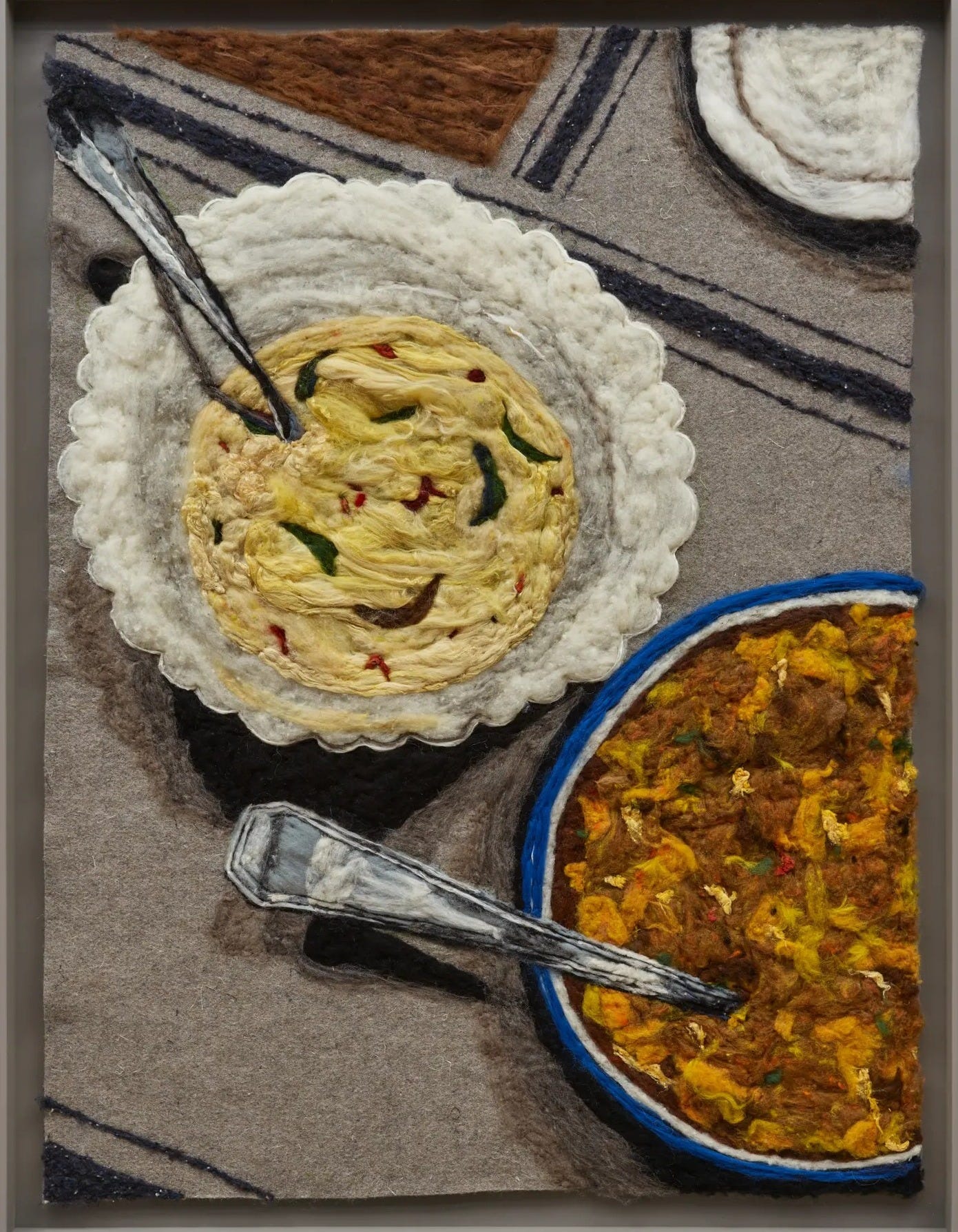
Melissa Joseph, Casserole Culture
Charles Moffett, New York · through October 17
Practice: Translates her own family photographs into needle-felted wool, some works reaching eight by ten feet.
Why now: A material associated with domestic craft, used at the scale and in the context of contemporary painting.
What to watch: The earliest-career artist on this list, with a distinctive medium and an immediately legible subject - family, food, memory, and South Asian American life.
She makes the image by stabbing fiber into fiber, thousands of times over. This show is inspired by her childhood growing up in rural Pennsylvania as a biracial kid overcome with the feelings of community. From the exhibition text, “For her, the phrase neither glorifies nor disparages; but rather, simply encapsulates the hardy, resourceful and community-minded tenets that surrounded her as a child and that remain an integral part of her life today.” I love how she took a symbol of community in rural Pennsylvania and connected it to how Indian families also show love and community - through food.
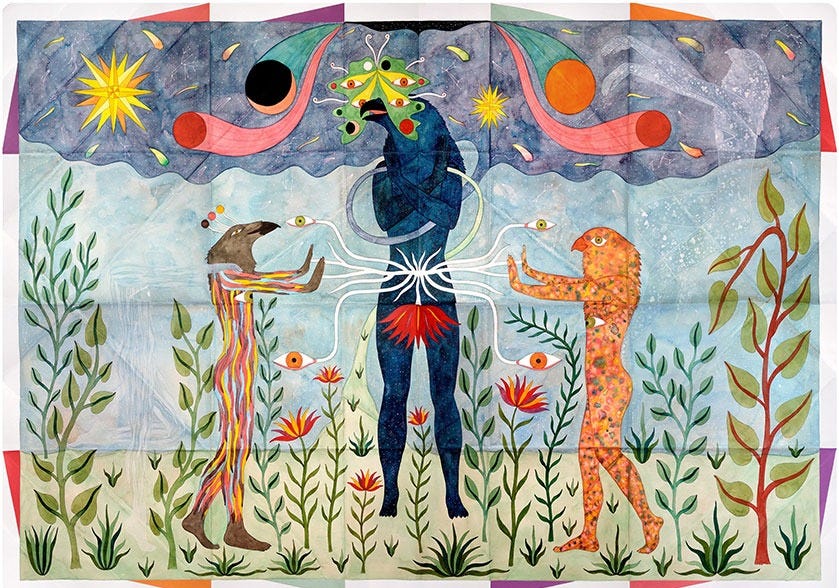
Rithika Merchant, The Dreaming Realm
Galerie LJ, Paris · October 16 to November 21
Practice: Combines botanical forms, mythology, ecological research and science fiction into intricate paintings on paper.
Why now: Eight new works continuing the narrative she began in 2020, moving from ecological collapse toward collective care and rebuilding.
Institutional signal: Recent projects include Dior’s embroidered scenography at the Musée Rodin and the Morgan Library’s exhibition on tarot.
For Dior, she made nine paintings that the Chanakya ateliers in Mumbai turned into embroidered panels large enough to line the Musée Rodin with 306 artisans and 144,000 hours of work. This show brings her back to eight sheets of paper and the scale at which she normally works.
What excites me about South Asian art right now is how alive it feels. The record-breaking auction results above belong to artists who have passed. But this newer generation is working from within a culture that is still moving. The work isn’t made for a Eurocentric gaze, to perform exoticism, or to explain an identity. It doesn’t fit neatly into those boxes because it doesn’t need to. It just exists as it is.
That is what it felt like standing in front of Babbar’s work last week. It didn’t feel like an artist trying to represent South Asia or explain it. It felt like an artist trying to make sense of his own world and, more importantly, trusting that we could meet him there.
If you liked this newsletter, please hit the ❤️. It helps more people discover my work.
Not sure what you’re drawn to yet? The quiz takes two minutes. Find My Art Style
Looking at something this fall and want a second pair of eyes? That’s Art Office Hours. Book Art Office Hours